
What Is Pay-Per-Call Affiliate Marketing? Complete Guide (2026)
Pay-Per-Call affiliate marketing is a performance model where affiliates earn commissions for driving qualified inbound phone calls to advertisers. Instead of clicks or form fills, the conversion is a tracked phone call usually validated by duration, caller intent, geography, or a post-call outcome. It’s high-intent traffic that often commands higher payouts, but it requires precise tracking, call-quality controls, and offer-fit.
Pay-per-call is becoming one of the most profitable channels in affiliate marketing. Below we gathered a practical, step-by-step reference tuned for affiliates and media buyers. You’ll get how it works, real examples, monetization details, tracking best practices, the top niches, risks to avoid, and quick FAQs.
Основные выводы
- Pay-Per-Call pays for real conversations, not clicks calls usually mean stronger purchase intent.
- Tracking is everything: unique numbers, IVR rules, call duration, and server-to-server validation prevent disputes.
- Best verticals: home services, insurance, legal, medical consults -industries where people prefer to speak to a person.
- Higher payouts = higher scrutiny: expect stricter lead rules, refund windows, and quality reviews from advertisers.
- Scale carefully: test channels, cap frequency, monitor call quality, and work with trusted networks or direct buyers.
Оглавление
- Quick Definition: What Is Pay-Per-Call Affiliate Marketing?
- Key Terms in Pay-Per-Call Platforms (Buyer, Target, Campaign)
- How pay-per-call works for affiliates – step by step
- How Pay-Per-Call Campaigns Work Behind the Scenes (Routing & Platforms)
- The Simplest Setup: One Publisher → One Buyer → One Target
- Multi-Target Routing: Sending Calls to Multiple Buyers Automatically
- Ring Tree Setups: Live Bidding on Every Call
- Hybrid Campaign Setups (Fixed Buyers + Live Bidding)
- Why Call Routing and Setup Matter for Affiliate Profitability
- Call Quality Filters and Validation (Protecting Revenue & Buyers)
- Pay-Per-Call vs Other Affiliate Marketing Models
- Real Pay-Per-Call Examples & Use Cases
- Best-Performing Pay-Per-Call Niches in 2026
- A Realistic Note from the Affiliate Side (When Pay-Per-Call Does Not Work)
- Traffic Sources That Actually Drive Phone Calls
- Tracking, Anti-Fraud & Call Validation (Practical Setup Guide)
- How Affiliates Optimize Pay-Per-Call Campaigns in Practice
- Common Challenges from the Field (Publisher & Reddit Insights)
- Legal & Compliance Musts for Pay-Per-Call Affiliates
- Pay-Per-Call FAQs
- Final Notes: How to Get Started with Pay-Per-Call Affiliate Marketing
Quick definition of Pay-Per-Call
Pay-Per-Call affiliate marketing is a performance model where an affiliate is paid when a tracked phone call meeting predefined qualifying rules (duration, geography, caller intent, etc.) reaches the advertiser; calls are attributed using unique tracking numbers and validated with call analytics or platform reporting.
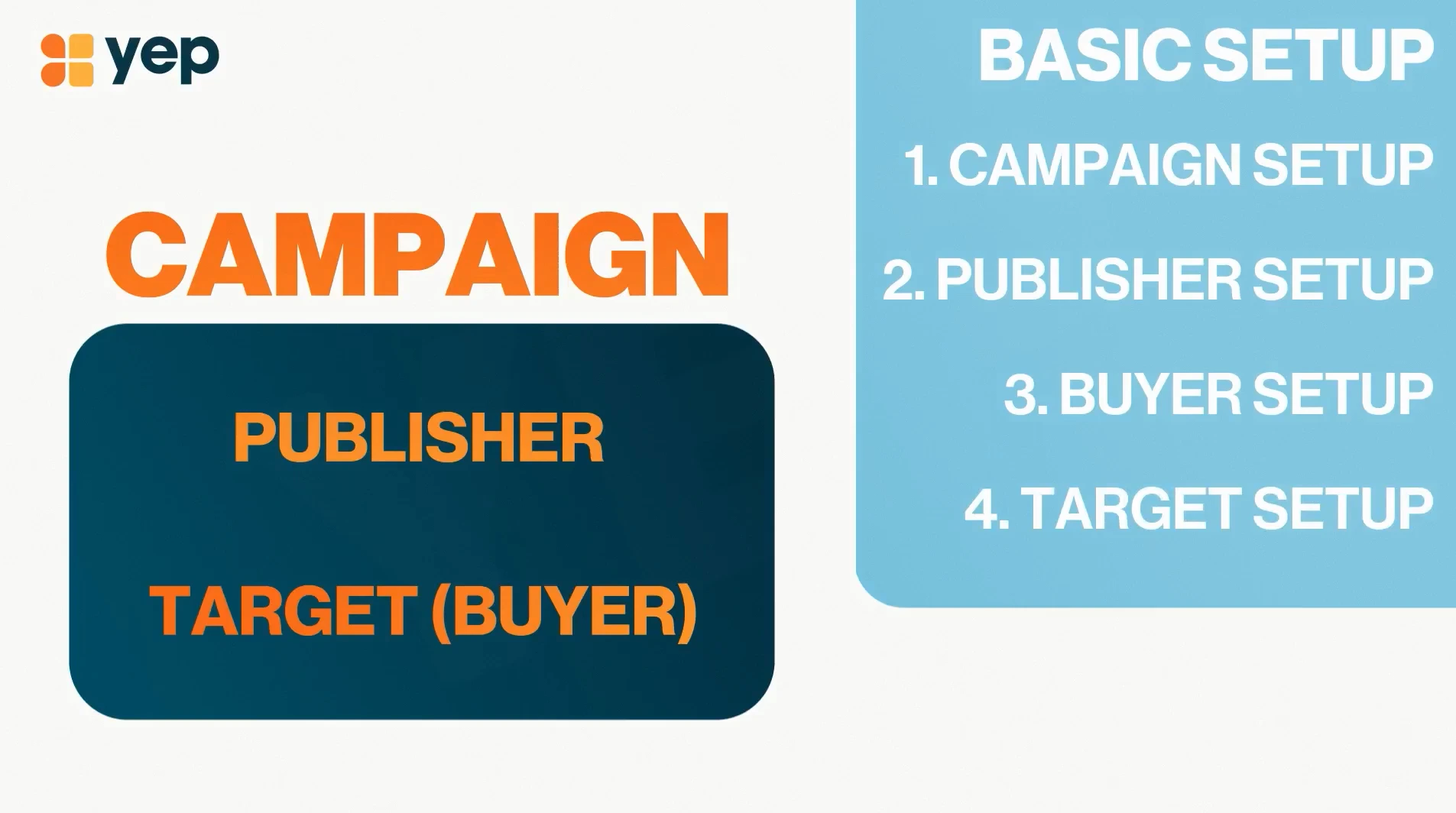
Key terms you’ll see inside pay-per-call platforms
If you work with pay-per-call systems, you will constantly encounter a few core terms:
- A buyer is the advertiser paying for calls.
- A target is the specific call center, region, or department within that buyer that receives calls.
- A campaign is the container that connects publishers, buyers, routing logic and tracking rules into one operational flow.
These building blocks define how calls are routed, qualified and billed.
How pay-per-call works for affiliates – step by step
- Join a network or find a direct buyer. Networks list PPCall offers. Some affiliates work directly with local advertisers or call centers.
- Pick an offer and read the rules. Offers specify payout, valid hours, qualifying call duration (e.g., 60s+), allowed geos, and disallowed traffic sources.
- Assign tracked numbers. For each campaign you use a unique phone number or dynamic number insertion (DNI). This ties calls back to your traffic.
- Drive traffic. Use call-centric creatives: call-only Google campaigns, Meta ads with click-to-call, local SEO listings, content with click-to-call buttons, or push/native ads optimized for calls.
- Calls route & record. Calls go through IVR or call tracking platforms; quality filters and routing rules apply.
- Validation & payout. When a call meets criteria, the network or advertiser validates it and pays the affiliate.
Up to this point, we’ve talked about pay-per-call as a business model. Now let’s quickly open the hood and look at how real pay-per-call campaigns are actually built and operated.
Behind every successful pay-per-call affiliate campaign is a call-routing and tracking platform (such as Ringba) that connects three parties in real time:
- the publisher (affiliate who generates the call),
- the buyer (advertiser who pays for the call),
- and the target (the specific call center or department that receives it).
In simple terms, pay-per-call platforms exist to track, qualify, route and monetize every incoming phone call.
The simplest setup: one publisher → one buyer → one target
The most basic pay-per-call flow looks like this:
An affiliate drives traffic (from Google, Meta, SEO, local listings, etc.) to a call-to-action.
The user clicks to call a tracked phone number.
That call is routed directly to a single buyer’s call center.
If the call meets the advertiser’s qualification rules (for example, 60 seconds minimum duration), the call is marked as a conversion and the affiliate earns commission.
This setup is common for:
- local home services,
- single-brand insurance offers,
- and exclusive buyer relationships.
It is simple, predictable, and easy to scale when volume is stable.
Multi-target routing: sending calls to different buyers automatically
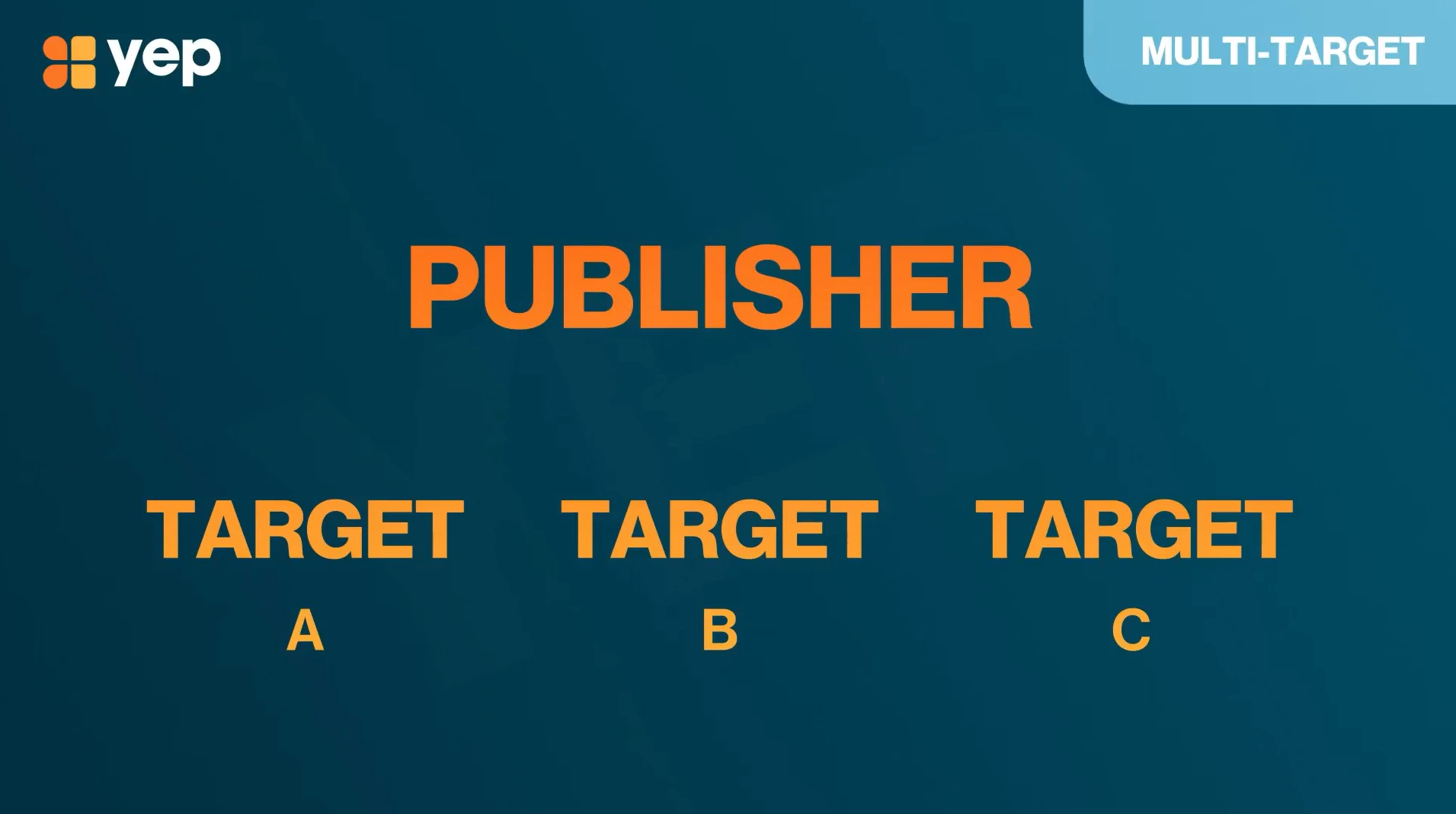
As soon as affiliates start working with multiple buyers for the same vertical, campaigns become more dynamic.
Instead of sending all calls to one advertiser, the platform can route incoming calls to several buyers based on predefined rules.
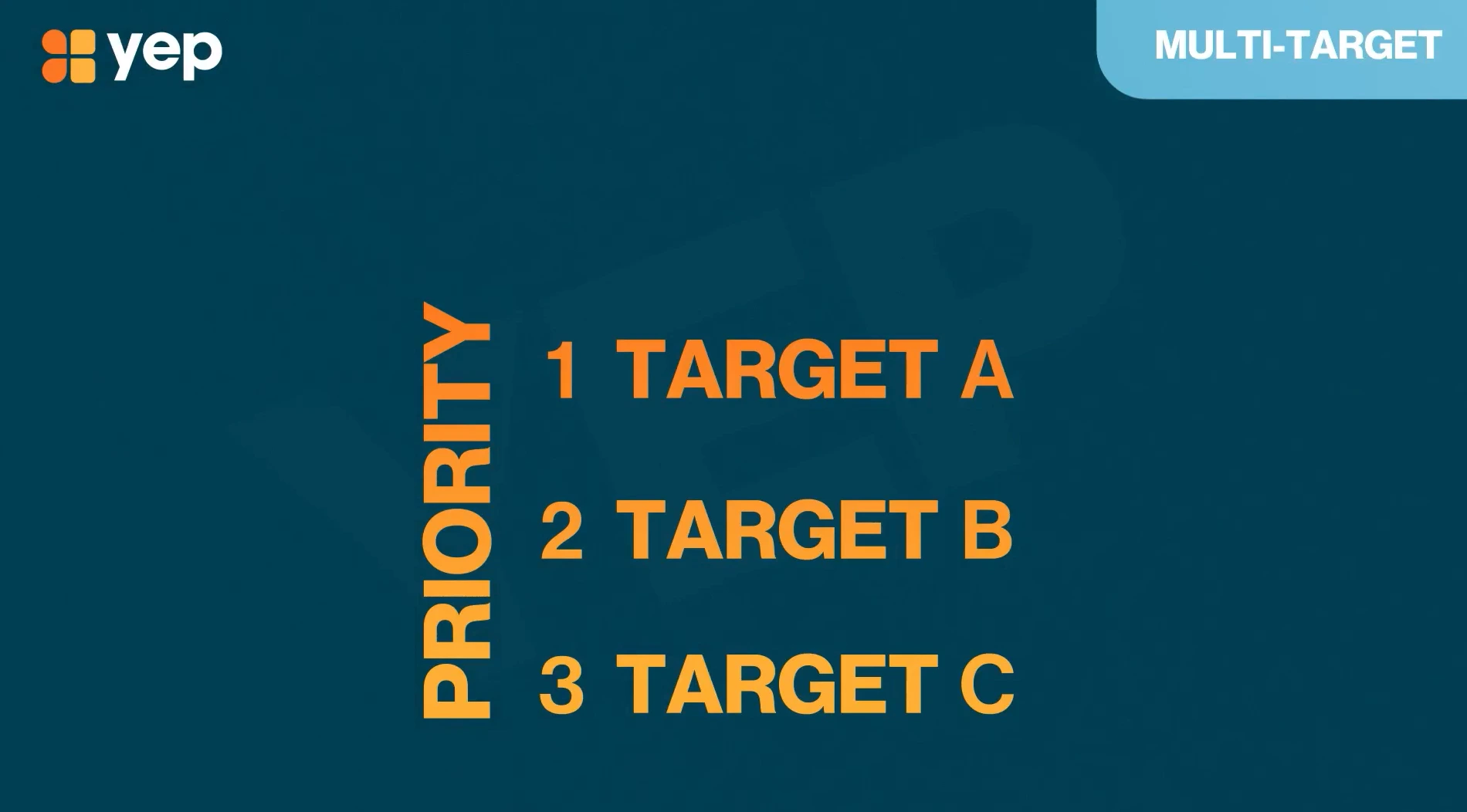
Two core routing rules are used in most pay-per-call campaigns:
Priority routing: Calls are first sent to the highest-priority buyer.
If that buyer is unavailable (hours, capacity, geo restrictions), the call is automatically routed to the next buyer.
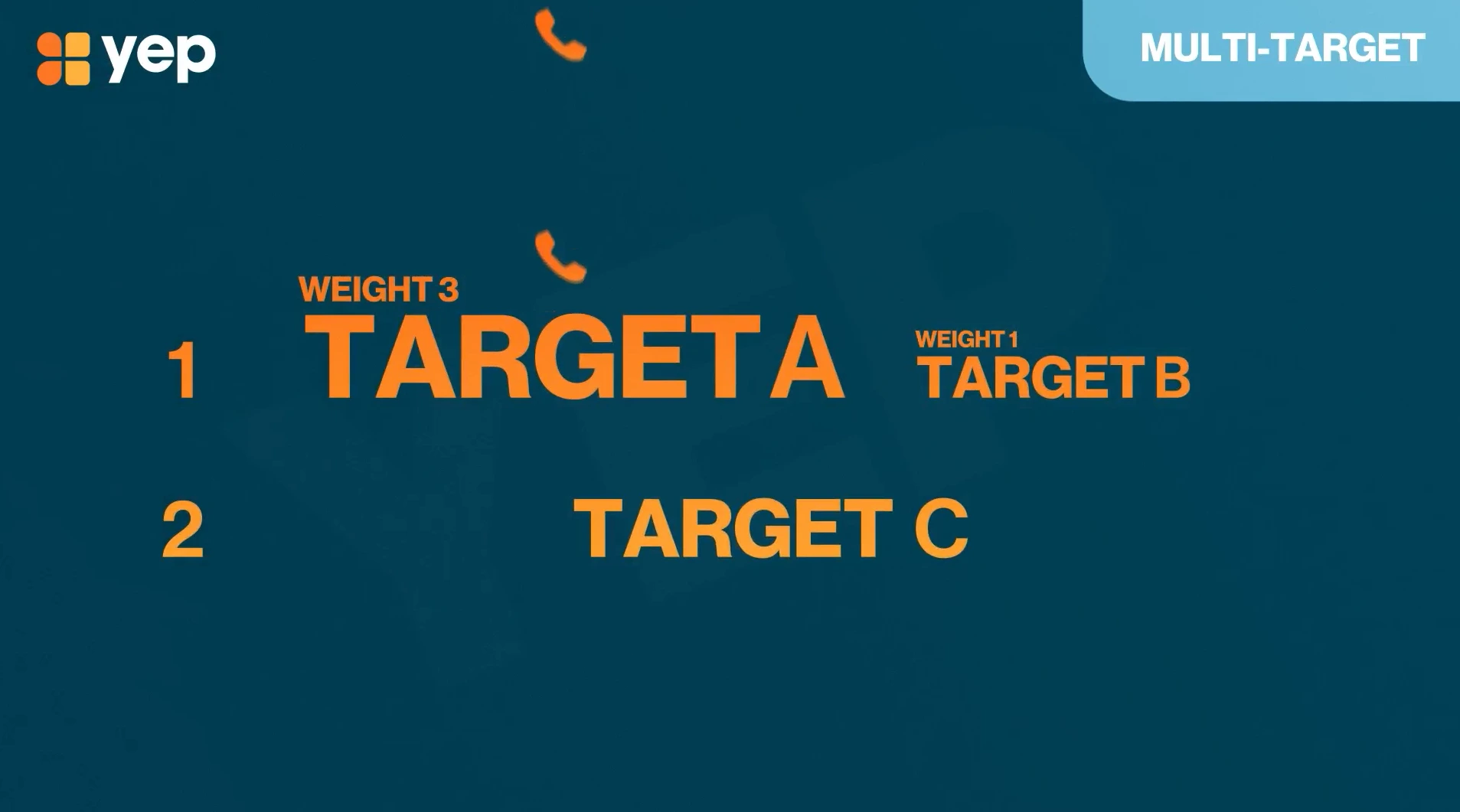
Weighted routing: If several buyers share the same priority level, calls are distributed between them based on traffic weight.
This allows affiliates to:
- balance delivery between multiple buyers,
- protect volume when one buyer caps out,
- and stabilize revenue across partners.
This is one of the main ways experienced affiliates reduce revenue volatility.
Ring tree setups (live bidding on every call)
More advanced pay-per-call setups use what the industry calls ring trees.
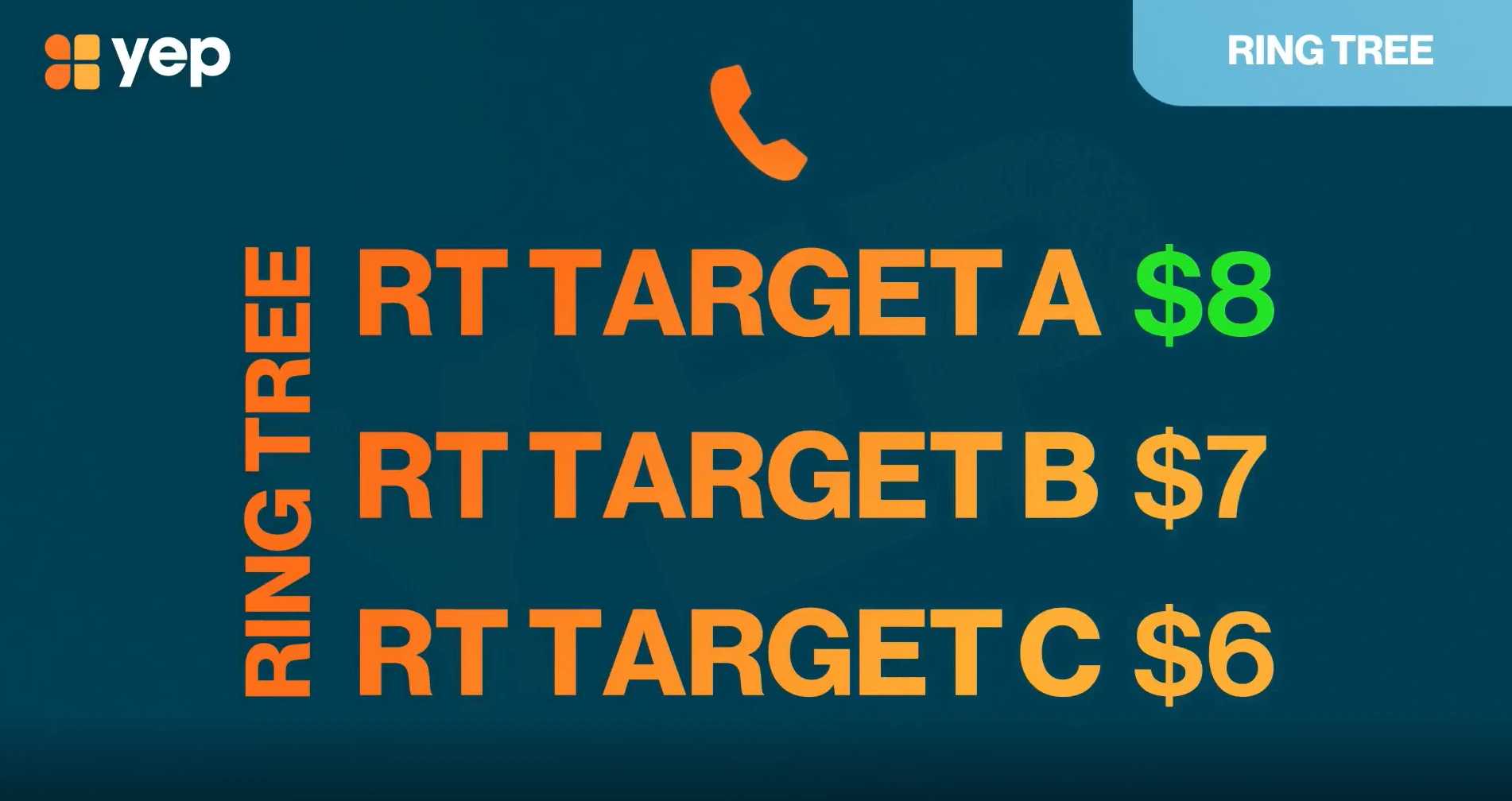
Instead of routing calls based on static priority rules, multiple buyers are allowed to bid on each incoming call in real time.
The system effectively runs a live auction for every call.
The buyer offering the highest bid receives the call.
This model is powerful because:
- the value of each call can change dynamically,
- affiliates can maximize revenue per call,
- and buyers only pay what the call is worth to them at that moment.
Ring trees are commonly used in competitive verticals such as:
- insurance,
- legal,
- healthcare,
- and finance.
However, affiliates should be aware that ring tree setups require more technical coordination and stricter call quality controls.
Poor call quality quickly kills bidding interest.
Hybrid setups: combining fixed buyers and live bidding
In real affiliate operations, setups are rarely “one or the other”.
Many high-volume affiliates combine:
- fixed targets (priority or weighted buyers),
- and ring tree targets (real-time bidders)
inside the same campaign.
This creates a hybrid model where:
- guaranteed buyers absorb baseline volume,
- and live bidders compete for premium traffic.
This hybrid structure helps affiliates protect margins while still capturing upside when demand spikes.
Why this setup matters so much for affiliates
From the outside, pay-per-call looks simple: drive calls, get paid.
In practice, most affiliate profitability is created at the routing and optimization layer.
The way calls are distributed, filtered and auctioned directly affects:
- your effective payout per call,
- buyer satisfaction and retention,
- and your long-term scalability.
This is why affiliates consistently point out that tracking and routing quality is one of the biggest challenges in pay-per-call campaigns.
Bad routing equals:
- dropped calls,
- frustrated callers,
- and buyers who stop accepting your traffic.
Call quality filters protect your margins
Most pay-per-call campaigns rely on qualification filters such as:
- minimum call length,
- new caller detection,
- geo validation,
- and operational hour checks.
These filters protect affiliates from being paid only for meaningful calls, not accidental dials or short hang-ups.
They also protect buyers, which is critical for keeping long-term relationships alive.
Strong call quality controls are one of the reasons pay-per-call performs well in high-intent verticals compared to traditional CPL traffic.
The big picture
Pay-per-call affiliate marketing is not just about buying traffic and forwarding phone numbers.
It is an operational model built on:
- real-time routing,
- buyer competition,
- call quality control,
- and precise tracking.
Affiliates who treat pay-per-call as a system -not just a traffic play -are the ones who scale it into a long-term, predictable revenue channel.
Pay-Per-Call vs other affiliate models
- Pay-Per-Click (PPC): Paid for clicks -top-of-funnel.
- Pay-Per-Lead (PPL): Paid for form submissions.
- Pay-Per-Call (PPCall): Paid for qualified calls -higher intent.
- Pay-Per-Sale (PPS): Paid for purchases -direct e-commerce conversion.
Bottom line: Pay-Per-Call sits between lead and sale – better intent than a form, cheaper than a sale, and ideal for high-value, service-driven verticals.
Real examples & use cases
- Roofing company: Affiliate runs local Meta ads with “Call for estimate” CTA → calls using tracked number → affiliate paid if call > 90s and caller provides address.
- Insurance broker: Search ads “car insurance quote” click-to-call → validated phone conversation about coverage → payout per qualified lead.
- Medical consults: Affiliates send traffic to telemedicine landing pages with immediate call option; payouts for consults booked via phone.
Best-performing niches in 2026
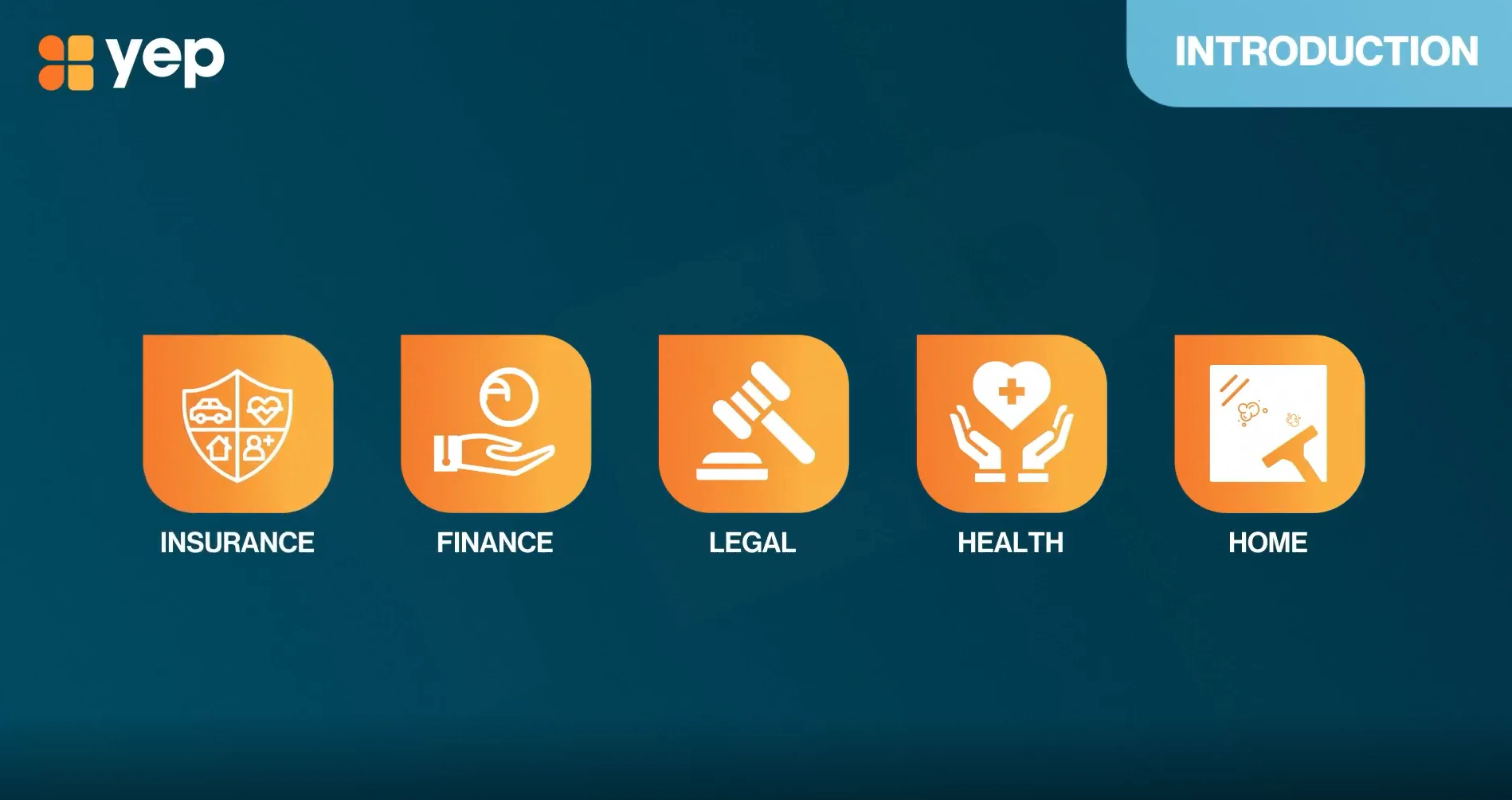
- Home services (HVAC, roofing, plumbing)
- Insurance (auto, health, life)
- Legal (personal injury, bankruptcy)
- Medical consults and elective procedures
- Financial services & debt relief
- Emergency services and locksmiths
These convert well because the buyer often wants to speak to confirm details, pricing, availability, or to feel reassured.
A realistic note from the affiliate side
One important insight from industry discussions is that not every niche works well with pay-per-call.
Products that:
- do not require consultation,
- are low-ticket,
- or are purely transactional
often perform better with standard CPL or CPS models.
Pay-per-call shines when:
- people genuinely want to speak to someone before buying.
That behavioral reality is what makes verticals like insurance, legal services, healthcare and home services so consistently profitable for call-based affiliates.
Traffic sources that drive calls
Paid:
- Google call-only campaigns (Search intent)
- Meta/Instagram with click-to-call buttons (use for localized ads)
- Native & push: short creative that directs to a landing page with call CTA
- Call buying / direct media buys on O&O inventory
Organic:
- Local SEO & Google Business Profile (click-to-call on mobile)
- Content/SEO pages optimized for “near me” + “call now” intent
- YouTube & review videos with visible numbers and description CTAs
Note: Not every channel fits every offer. Google call campaigns match high-intent search; social often needs education + CTA.
Tracking, anti-fraud & validation (practical setup)
Tracking is the backbone of pay-per-call. Poor tracking = chargebacks and disputes.
Essential components
- Unique tracking numbers per campaign, geo, or landing page (DNI recommended).
- Call analytics platform (Ringba, Invoca, CallRail) with webhook or S2S integration.
- IVR rules to qualify calls (press 1 for service, select option).
- Minimum duration filter (e.g., 60 seconds) to screen out low-value calls.
- Recording & scorecards to audit call quality and reduce fraud.
- Server-to-server (S2S) postbacks between tracking provider and affiliate network for reliable attribution.
Common fraud & how to stop it
- Auto-dialers / bots: Block with CAPTCHA/IVR goodness and voice-pattern detection.
- Spoofed numbers: Use platform validation and carrier checks.
- Traffic laundering (cloaking redirects): Use transparent funnels and partner with reputable networks.
- Toll-free abuse: Monitor unusual volume spikes; stagger scaling.
How affiliates optimize pay-per-call campaigns in practice
From an affiliate perspective, optimization usually focuses on four areas:
- Mobile-first pages with one big call button and click-to-call tracking.
- Pre-call micro-intent capture: short form + click-to-call to increase lead quality.
- Day-parting and geo-bid adjustments: cap bids to business hours and local zones.
- A/B test creatives with different CTAs (“Call now,” “Free estimate,” “Talk to an expert”).
- Monitor average call duration and post-call conversion; optimize toward the highest closing sources.
- Use sales scripts or IVR qualifiers to increase lead readiness before routing.
- Landing page and call-to-action design to improve click-to-call rate.
- Traffic source selection and keyword targeting to increase caller intent.
- Routing logic and buyer distribution to maximize revenue per call.
This aligns closely with what affiliate marketers discuss in community forums: scaling pay-per-call is less about volume alone and more about operational precision.
Common challenges from the field
Affiliates and publishers on forums often highlight real pain points:
- Tracking disputes are frequent without good call recording and S2S postbacks.
- Scaling profitably requires testing multiple channels -a winning Google call campaign may not translate to Meta.
- Call quality matters: advertisers reject low-quality traffic even if volume is high.
- Finding direct buyers removes network fees but requires trust and operational coordination.
Takeaway: treat pay-per-call like a partnership -buyers care about quality as much as affiliates care about volume.
Legal & compliance musts
- US: TCPA -consent required for automated calls/texts; strict penalties.
- EU / UK: follow GDPR for any personal data captured during calls.
- PCI: if caller provides payment card info, ensure secure handling and compliance.
- Local licensing: some verticals (legal, medical) require explicit disclosures and licensing checks.
Learn more about performance marketing compliance and confirm allowed practices with the advertiser and the network; non-compliance can cost far more than lost revenue.
PPC FAQs
Is pay-per-call worth it for newbies?
Yes, if you have a reliable traffic source and mobile optimization skills. Start small and choose a niche with known call behavior (plumbing, HVAC).
How do I avoid chargebacks and disputes?
Use trusted call tracking with recordings, IVR validation, S2S postbacks, and clear offer rules. Keep campaign logs and timestamps.
Which tracking platforms do affiliates use?
Popular choices mainly Ringba, Retreaver, TrackDrive, and custom PBX + S2S setups. Match platform feature set to your volume and routing needs.
How much can I earn?
Earnings vary. High-value verticals can pay hundreds per qualified call. Your ROI depends on traffic cost, conversion rate to quality calls, and advertiser pay rules.
Can I run pay-per-call with SEO?
Absolutely. Local SEO + “near me” searches are excellent for click-to-call volumes. Combine with call tracking and mobile CTAs.
Final notes how to get started with Pay-per-call
- Pick one niche you can buy traffic for or rank for locally.
- Join a respected pay-per-call network or find direct advertisers.
- Set up call tracking with unique numbers and S2S postbacks.
- Build a mobile-first page with a single CTA: call now.
- Test small, measure duration & conversions, then scale.
Вам также может понравиться
- The Rise of Pay-Per-Call in 2026: High-Paying Opportunities
- Pay Per Call без секретов: тренды, ниши и воронки
- Google Ads for Lead Generation — What Works in 2026
- What Do You Do to Increase Lead Quality?
- Performance-стратегии: 9 проверенных тактик для максимизации ROI
Поделиться