
Affiliate Marketing Examples: What Actually Works?
Affiliate marketing is much easier to understand when you stop looking at diagrams full of arrows and start looking at what companies and affiliates actually do.
What are some examples of affiliate marketing? Think Amazon Associates or Walmart affiliates, there are publishers running paid campaigns constantly. The setup changes from one example to the next, but the basic idea is the same: someone sends relevant traffic to an offer and earns when that traffic produces a result.
You have probably come across affiliate marketing today without noticing.
Maybe you read a “best laptops” article and ended up on Amazon. Maybe a creator linked a TV they were reviewing at Best Buy. Maybe you clicked through to an eBay listing from a collector’s guide.
None of these feel exactly the same, which is kind of the point.
There isn’t one standard affiliate marketing model. So rather than spending half this article defining it, let’s look at some affiliate marketing examples that show how it works in the real world and what you can actually learn from them.
Основные выводы
- Affiliate marketing can work through websites, creators, social media, paid traffic, apps, and other channels.
- A strong program gives affiliates something that is actually worth promoting.
- The best affiliates give people a reason to click instead of simply dropping a link.
- Huge product selection, niche expertise, convenience, and strong purchase intent can all create affiliate opportunities.
- Different affiliate models make sense for different audiences and traffic sources.
What Does Affiliate Marketing Look Like?
The basic setup is simple.
A brand or retailer has something to sell. A publisher, creator, or media buyer has an audience or a way to reach potential customers.
The affiliate sends people toward the offer using a tracked link. If someone completes the agreed action, the affiliate gets paid.
If you want the longer version, Yep has a guide explaining what affiliate marketing is.
But the fun part is seeing how differently that simple idea can be used.
5 Affiliate Marketing Examples To Learn From
1. Amazon: Give Affiliates Almost Too Much to Choose From
It is hard to talk about affiliate marketing examples without Amazon showing up eventually.
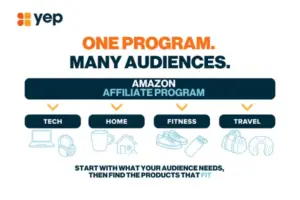
Сайт Amazon Associates program lets publishers, bloggers, and creators recommend products and earn from qualifying purchases.
And the obvious advantage is choice.
A tech publisher can link laptops. A home blogger can recommend coffee machines. A runner can share the shoes they use. Someone with a strangely dedicated website about vacuum cleaners can, presumably, have an excellent afternoon.
The program works across so many types of content because the product selection is broad enough to fit very different audiences.
But that does not mean simply dropping Amazon links everywhere works.
The recommendation still needs context.
A “10 Things I Actually Use for Camping” guide makes sense because you are helping answer the specific question at hand even without any links.
What you can learn: Start with what your audience needs, then find products that fit. You can only mold your product list around the need first.
If product-led content interests you, our guide to creating an affiliate website covers reviews, content, niches, and traffic in more detail.
2. Walmart: Make Everyday Products Easy to Promote
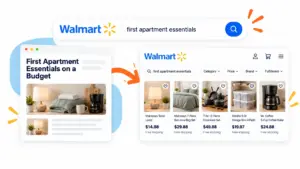
Walmart’s affiliate program works on a similar basic model but shows another important strength of retail affiliate marketing: familiarity.
Affiliates can create links to Walmart products, use promotional materials, and send their audiences toward products sold through Walmart.com.
The interesting part is how many everyday buying decisions this opens up.
You do not always need a dramatic “best product of the year” review.
Sometimes the useful content is:
- What you need for a first apartment
- Back-to-school essentials
- A budget home office setup
- Camping gear under a certain budget
- What to buy before hosting Thanksgiving
The products play a role in a bigger idea that people are often looking for.
That can feel much more useful than simply listing things for sale.
What you can learn: Build content around the job someone is trying to get done. The products should support the idea rather than becoming the entire idea.
This is also where knowing your affiliate marketing niche becomes useful. The more clearly you understand your audience, the easier it is to know what belongs in front of them.
3. eBay: Turn Very Specific Searches Into Opportunity
Amazon and Walmart are useful when someone wants a product.
eBay is there to narrow down the search for when someone wants that exact product.
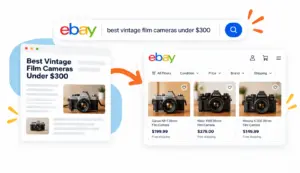
A discontinued camera.
A particular trading card.
An older game console.
A sneaker from three seasons ago in exactly the right size.
That makes eBay’s Partner Network especially well suited to publishers and creators working in categories where individual products, collectibles, secondhand goods, or harder-to-find items matter.
eBay also supports different affiliate setups, from regular tracked links to integrations using feeds and APIs.
But again, the interesting lesson is not technology, but the intent.
When someone is reading a niche article or a review on a specific topic, say “best vintage film cameras under $300”, they are probably much closer to shopping than someone casually reading about photography.
What you can learn: Specific audiences can create specific buying intent. You do not always need millions of visitors if the people you do reach know exactly what they are looking for.
And yes, this is another reason niche affiliate sites can work surprisingly well.
4. Best Buy: Let Creators Show Instead of Tell
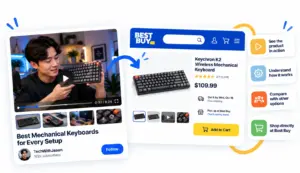
Tech is a particularly good fit for creator affiliate marketing because products are easier to understand when you can actually see them being used.
Best Buy’s Creator Program allows creators to share tracked product links and build shoppable storefronts around the products they recommend.
Now imagine two ways of selling someone a mechanical keyboard.
Option one: tell them it has a particular switch type, layout, and polling rate.
Option two: show them the keyboard, let them hear it, compare it with three others, show how big it looks on a desk, and explain who should actually buy it.
Which one feels easier to make a decision from?
That is the creator advantage.
A creator can put the product inside a real situation instead of leaving the shopper to imagine what the specifications mean.
What you can learn: Some products need demonstration more than description. Video, social content, and creator storefronts can close that gap.
This also applies beyond tech. Beauty, fitness, cooking, travel, home products, fashion, and plenty of other categories benefit from seeing something in use.
5. Paid Media Affiliates
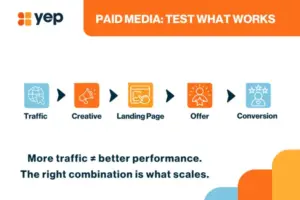
Not every affiliate needs a website full of reviews or an audience waiting on Instagram.
Some buy the traffic themselves.
Paid media affiliates use channels such as search, social, native advertising, and display to drive people toward offers.
Now the questions become very different.
How much did the traffic cost?
Which creative actually made someone stop?
Did one landing page convert better than another?
Which audience spent money instead of just clicking?
And is the payout high enough for any of this to make financial sense?
Welcome to the spreadsheet side of affiliate marketing.
This model is much more dependent on testing and optimization because every visitor has a direct cost attached to them.
An ad can look brilliant and still be a terrible campaign if the numbers underneath it do not work.
What you can learn: More traffic is not automatically better. What matters is finding traffic, creative, offers, and landing pages that work together.
That is also why strong affiliate tracking matters. Once real money is being spent on traffic, guessing gets expensive fairly quickly.
What Do These Affiliate Marketing Examples Have in Common?
Amazon, Walmart, eBay, and Best Buy are obviously very different businesses.
The affiliates promoting them can be even more different.
One might write product reviews. Another makes YouTube videos. Another runs paid search campaigns. Another spends an unreasonable amount of time comparing collectible sneakers.
But a few things stay the same.
There is a reason behind the click
Good affiliates do more than place links.
They help someone compare, discover, understand, save time, find something specific, or see a product in action.
The link comes after that value.
The product fits the audience
This seems obvious, but it is where a lot of affiliate content loses the plot.
If your entire audience follows you for budget PC builds, a graphics card recommendation makes sense.
A lawnmower needs a much stronger explanation.
They catch people at different stages
Someone watching a “new desk setup” video may only be discovering products.
Someone searching eBay for a specific discontinued camera probably has their wallet much closer.
Affiliate marketing can influence people across that whole journey, and different publishers are better suited to different moments.
Which Affiliate Marketing Model Fits You?
| If you have… | Consider… | Why |
| Product knowledge | Reviews and buying guides | Help people compare options |
| A focused niche | Retail affiliate programs | Recommend relevant products |
| A social or video audience | Creator affiliate marketing | Demonstrate products naturally |
| High-intent search traffic | Product comparisons | Reach people close to a decision |
| Paid media experience | Performance campaigns | Test and scale traffic directly |
And you can combine them.
A YouTube creator can have a website. A review site can run email. A media buyer can build organic content.
There is no rule saying you have to pick one lane forever.
Where Yep Ads Fits In
These examples may use very different channels, but they all depend on the same basic match: the right offer, the right publisher, and the right audience.
Да helps brands and publishers make those connections across performance marketing campaigns.
For brands, that means accessing publishers and traffic sources suited to the campaign.
For publishers, it means finding offers that fit the way they actually generate traffic, whether that comes through content, email, social, paid media, or another channel.
The goal is not to make every affiliate work the same way.
It is to figure out what each one does well and build from there.
Часто задаваемые вопросы
What is a simple example of affiliate marketing?
A publisher writes a review and links to the product on Amazon. A reader clicks the tracked link and makes a qualifying purchase. The publisher then earns a commission. The same basic process can happen through social media, video, email, paid ads, or other channels.
Can you do affiliate marketing without a website?
Yes. Creators and publishers can use YouTube, social media, newsletters, apps, paid media, and other channels. A website can be useful for search traffic and longer-form content, but it is only one option.
What makes affiliate marketing successful?
Strong affiliate marketing usually starts with audience and offer fit. From there, useful content or creative, quality traffic, reliable tracking, conversion rates, and workable campaign economics all influence whether the campaign succeeds.
Заключительные размышления
There is no single version of affiliate marketing.
Amazon shows what happens when affiliates have millions of products to work with. Walmart makes everyday retail recommendations easy to build around. eBay proves just how valuable specific buying intent can be. Best Buy shows why creators and product demonstrations fit together so naturally.
And paid media shows you do not necessarily need an audience waiting for you in the first place.
The common thread is simple: give the right person a useful reason to click.
For brands: Да can help connect your campaigns with publishers and traffic sources built around measurable results.
For publishers: Find offers that fit your traffic and audience, then focus on what you do best.
Поделиться
