
Ads Are Coming to ChatGPT: New OpenAI Announcement
Ads inside ChatGPT are no longer a rumour. This is the first time AI chat has started behaving like a real media platform.
Last week, on January 16th, OpenAI officially confirmed that advertising is coming to ChatGPT – marking one of the biggest shifts in how generative AI products may be funded and scaled going forward. For a product that millions of people use daily for work, learning, and decision-making, this is a meaningful change.
This article breaks down what OpenAI actually announced, who will see ads first, how they’ll work, what users are worried about, and why this move makes sense financially. We’ll also touch on how competitors like Google are reacting.
This is part one of a two-part series. In the next article, we’ll go deeper into how to set up ChatGPT ads and how brands may eventually participate.
You might also like:
- How to Get Found on ChatGPT and Google AI
- Meta’s Andromeda Update: Facebook Algorithm Change
- Buy on LLMs & Agentic eCommerce: What It Means for Brands
Key Takeaways
- In January 2026, OpenAI will begin testing ads in ChatGPT, starting with limited exposure and clear separation from conversations.
- Ads will appear outside the core chat response, not inside generated answers
- Conversations will not be shared with advertisers
- Trust, transparency, and user control are central to OpenAI’s ad strategy
- Advertising opens a major new revenue stream as AI infrastructure costs continue to rise
Table of Contents
- Ads in ChatGPT: What OpenAI Announced
- When ChatGPT Ads Start?
- Will ChatGPT Ads Affect Privacy or Conversations?
- The Community Response: What the Users Are Worried About
- How OpenAI Plans to Address Trust & Privacy Concerns
- Will Google Gemini Introduce Ads as Well?
- The Business Reality Behind ChatGPT Ads
- What This Means Going Forward
- Final Thoughts
Ads in ChatGPT: What OpenAI Announced
OpenAI confirmed that ads are officially coming to ChatGPT as part of a broader effort to expand access to AI while keeping free usage available.
According to OpenAI, advertising is being introduced carefully and deliberately – not as a replacement for subscriptions, but as an additional way to support the growing cost of operating large AI models.
The company emphasized a few core points:
- Ads will be clearly labeled
- Ads will not influence how ChatGPT generates answers
- Ads are designed to be contextually relevant, not intrusive
This isn’t a sudden flip of a switch. OpenAI is framing this as a controlled experiment, with heavy focus on user experience.
When ChatGPT Ads Start?
Ads will start in limited testing, not a global rollout.
Based on OpenAI’s announcement:
- Ads will initially appear to some free-tier users
- Paid plans (like Plus and Team) will not see ads
ChatGPT Ads Testing Timeline
OpenAI says ad testing will roll out gradually, starting small in January 2026 and expanding based on what they learn from user feedback and performance during the early phase. At this stage, OpenAI hasn’t confirmed which regions will be included first, how advertisers will get access, or what the bidding and targeting setup will look like – those details are still expected later as testing progresses.
Who Will See ChatGPT Ads?
During the initial rollout, ChatGPT ads will only be shown to a limited group of free-tier users, while paid users (including Plus and Team) won’t see ads as announced by OpenAI.
How ChatGPT Ads Will Look Like?
To start, OpenAI plans to test ads at the bottom of ChatGPT responses.
If a conversation naturally aligns with a relevant product or service, a sponsored placement may appear below the answer – clearly labelled as an ad.
Think of it as:
- No interruption mid-response
- No product placement inside the answer itself
- No forced clicks or overlays
The goal is visibility without disruption.
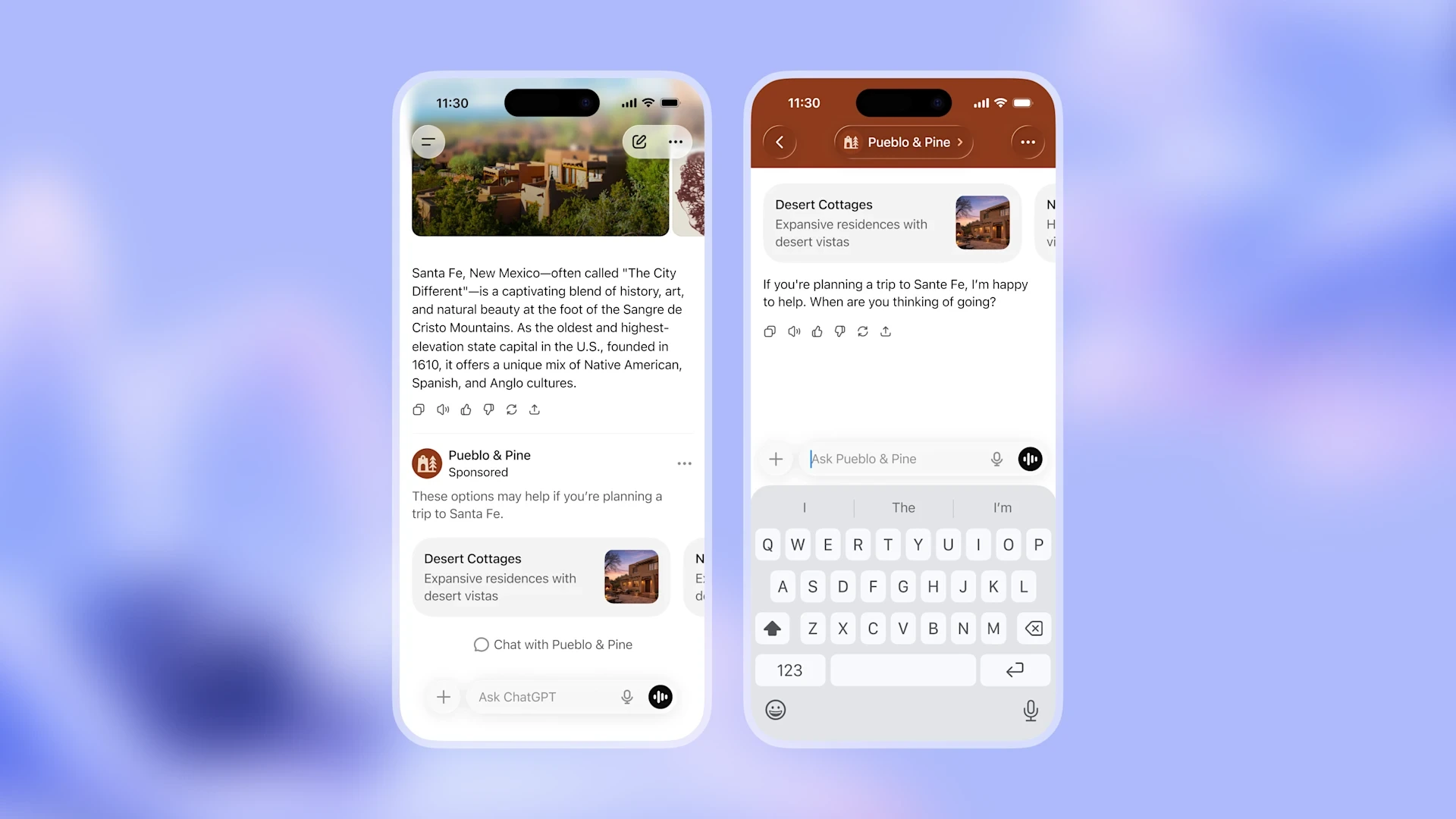
Image Source: OpenAI
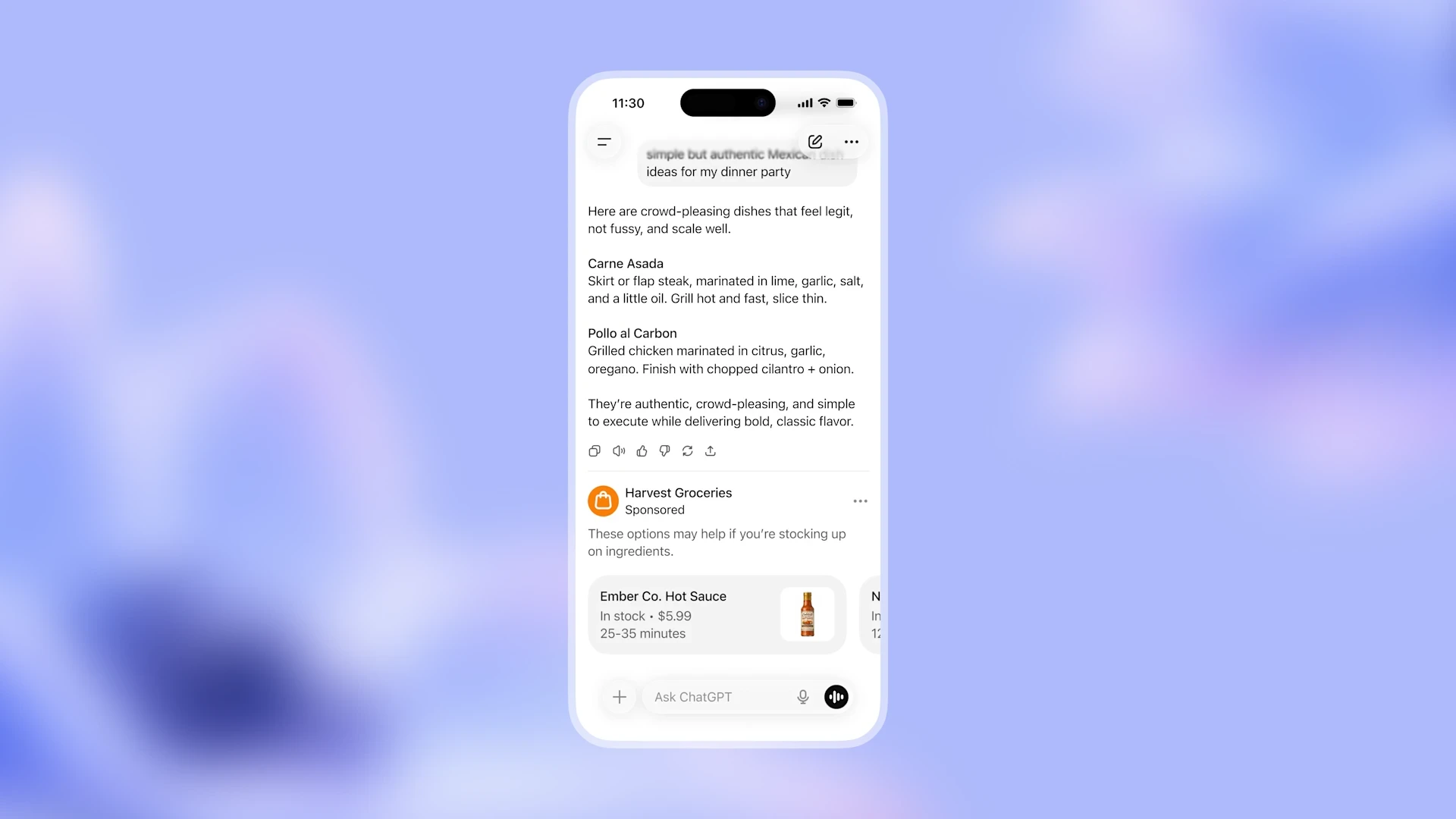 Image Source: OpenAI
Will ChatGPT Ads Affect Privacy or Conversations?
Short answer: no.
OpenAI has stated that:
- Conversations remain private
- Advertisers do not receive chat transcripts
- Ads do not change how answers are written
Will Ads Change ChatGPT Answers or Recommendations?
Ads are contextual, not personal.
For example, if someone asks about project management tools, they might see a relevant sponsored suggestion below the response – but the actual conversation content stays confidential.
The Community Response: What the Users Are Worried About
And of course… the internet had thoughts. Lots of them. As expected, the announcement sparked strong reactions across Reddit and developer communities.
Some of the most common concerns include:
- Whether ads will reduce trust in ChatGPT’s answers
- Fear of “sponsored responses” influencing recommendations
- Worries that conversations could be used for ad targeting
- Concerns about long-term product degradation
In short, users are protective of ChatGPT because they see it as a tool, not a feed – and they don’t want it to turn into one.
These concerns aren’t being ignored – OpenAI addressed many of them directly.
How OpenAI Plans to Address Trust & Privacy Concerns
OpenAI’s advertising principles are built around separation and transparency.
The company has stated clearly:
- Ads will not be mixed into AI-generated answers
- Conversations will not be shared with advertisers
- Ads will be placed around the experience, not embedded into logic
Does ChatGPT Share Conversations With Advertisers?
ChatGPT will continue to generate responses the same way it does today. Ads are meant to be context-aware, not conversation-driven.
OpenAI clarified that advertisers won’t have access to chat transcripts unless a user directly messages the advertiser through the ad. “We do not share your conversations with ChatGPT with advertisers.
If you choose to message an advertiser through an ad (for example, to ask questions while making a purchase decision), the advertiser will only see the messages you send them directly.”
This distinction matters: relevance comes from topic context, not from mining personal chat history.
Will Google Gemini Introduce Ads as Well?
Google DeepMind CEO Demis Hassabis in his interview with Ina Fried at Axios House Davos publicly said he was surprised OpenAI moved so quickly with ads. “we don’t feel any immediate pressure to have to make knee-jerk decisions like that,” – he said. While acknowledging that ads have funded much of the internet, he also noted that monetizing an AI assistant raises unanswered questions – “There’s nothing wrong with ads. They funded much of the consumer internet. “But if you think of the chatbot as an assistant that’s meant to be helpful – ideally the kind of technology that works for you as an individual – then there’s a question about how ads fit into that model.”.
Google has made it clear they’re watching user reaction closely – but they’re not rushing to copy the move. For now, Gemini’s monetization path remains cautious and experimental.

The Business Reality Behind ChatGPT Ads
There’s a practical reason ads are coming now: AI is expensive. OpenAI is reportedly expecting losses to climb to around $14 billion by 2026, and internal financial documents cited by Fortune and The Information suggest the company may continue spending heavily burning roughly 57% of its revenue through 2027.
OpenAI continues to burn significant capital due to:
- Model training costs
- Inference compute
- Massive data center investments
The company has outlined infrastructure plans that could total over $1 trillion in spending over the next eight years, partnering with cloud and chip providers to scale globally.
At the same time:
- ChatGPT has an estimated 800 million weekly active users
- Roughly 90% are on the free tier, and a small percentage pay for subscriptions.
Advertising gives OpenAI a way to monetize scale – without forcing everyone into a subscription.
What This Means Going Forward
This move signals something bigger than ads in one product.
It marks the start of AI platforms entering the same monetization era that search, social, and video went through years ago – but with far higher expectations around trust and transparency.
How OpenAI handles this rollout will likely influence:
- User expectations across AI tools
- Enterprise adoption comfort levels
- How future AI ad products are designed
Final Thoughts
Ads coming to ChatGPT don’t mean the product is changing overnight – but they do mark a turning point.
OpenAI is trying to balance three things at once: scale, sustainability, and trust. Whether they succeed will depend on execution, restraint, and how closely they listen to users.
For now, one thing is clear: AI platforms are no longer just tools – they’re becoming ecosystems.
In the next article, we’ll explore what advertising inside ChatGPT could realistically look like for brands, marketers, and businesses – and what signals to watch as this space evolves.
Stay tuned.
FAQs
Will ChatGPT have ads?
Yes. OpenAI confirmed it will start testing ads inside ChatGPT, beginning with limited rollout to some free-tier users, with ads shown below responses and clearly labeled.
Is AI going to replace advertising?
Not replace it – reshape it. AI is changing how people discover products and make decisions, but brands will still need advertising to drive awareness, demand, and conversions (just with new formats and new rules).
How does ChatGPT make money without ads?
Mainly through paid subscriptions (like Plus and Team), enterprise plans, and API usage. Ads are being introduced as an additional way to support free access as usage and infrastructure costs grow.
Does ChatGPT allow commercial use?
Yes, in many cases. ChatGPT can be used for business tasks like writing, planning, customer support drafts, and marketing content – but you still need to follow OpenAI’s policies and your local laws (especially around privacy, claims, and copyrighted content).

