
ChatGPT Ads Update: See What’s New in Ads Manager Beta
OpenAI just rolled out another set of Ads Manager Beta updates. Here’s a deep dive into what can make your life a whole lot easier and what marketers should actually care about.
In its latest ChatGPT Ads update, OpenAI is streamlining the process of the campaign creation, simplifying reporting, and making approvals easier.
Instead of another flashy new ad format, this round is focused on making Ads Manager Beta easier to use at scale.
Advertisers can now create product-feed campaigns in bulk, see product review statuses more clearly, pull more conversion data, manage account and brand names separately, and reach users across seven additional Asian markets.
Now these updates may not seem so fancy on their own. But if you’re the person actually building, tracking, and optimizing campaigns, they’re the changes that can make a new channel much easier to work with.
We’ve already covered how ChatGPT Ads are developing as an advertising channel. This time, we’re skipping the basics and looking at what just changed, why it matters, and what marketers should pay attention to next.
Основные выводы
- OpenAI has introduced bulk creation for product-feed campaigns, making larger catalog campaigns easier to build.
- Advertisers can now see product review status directly within Ads Manager.
- The Insights API can report attributed conversion events beyond a campaign’s selected optimization goal.
- Account, brand, and legal names can now be managed separately.
- ChatGPT Ads have expanded into Indonesia, Malaysia, the Philippines, Singapore, Thailand, Vietnam, and Taiwan.
Yep x OpenAI: Why Yep Ads Is Watching ChatGPT Ads Closely
There’s also a reason we’re watching these updates closely. Yep Ads recently became an OpenAI Select Partner, giving our team a closer working relationship with OpenAI as we continue expanding our AI capabilities for clients.
From AEO and LLM discoverability to AI-assisted creative, automated marketing workflows, custom AI-powered processes, and emerging opportunities across ChatGPT Ads, these developments connect directly with the work we’re already doing with brands. That relationship can also give us earlier visibility into certain updates, helping us share what’s changing and, more importantly, what it could mean for marketers.
So rather than simply listing what’s new, we’re looking at this update from a marketer’s point of view: what changed, what becomes easier, and what should you actually care about?
OpenAI Is Building the Less Glamorous Parts of an Ad Platform
New advertising channels tend to get attention for their formats, targeting, and placements.
Once marketers start running campaigns, the questions become much more practical.
How quickly can you build 20 campaigns instead of one? What happens when products are rejected? Can you measure conversions deeper in the funnel? Can a large organization keep its internal account structure separate from its public brand?
That is where this update gets interesting.
OpenAI still describes Ads Manager as a beta product, but its current Ads Manager overview shows a platform increasingly built around campaign creation, performance monitoring, and account management.
The latest updates add another layer to that infrastructure.
Product Feed Campaigns Are Getting Easier to Scale
One of the biggest changes is aimed directly at ecommerce advertisers.
According to OpenAI’s latest advertiser update, marketers can now create multiple product-feed campaigns and ad groups from a spreadsheet. Advertisers can go to Campaigns → Bulk uploads → Bulk sheet and download a dedicated Product feed template, with ad templates generated automatically during the process.
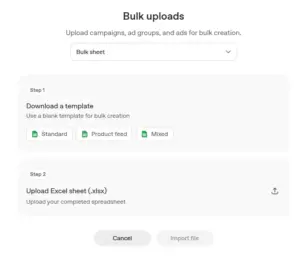
Источник: Yep Ads. Bulk upload example from Ads Manager.
That sounds like a workflow improvement, but the real benefit is scale.
A retailer may have several product categories, markets, seasonal collections, and campaign structures to manage. Building each one individually adds work quickly. A bulk workflow makes it easier to turn a larger catalog into multiple campaign and ad-group structures without repeating the same setup every time.
There is one important distinction here. OpenAI’s general Ads Manager documentation still says its standard CSV bulk uploader does not support product-feed campaigns. Which seems to be separate from the product-feed-specific bulk-sheet workflow announced in the latest update.
In other words, advertisers should follow the newest Product feed template workflow instead of relying on an assumption that standard campaign CSV now supports feeds.
OpenAI’s current product-feed documentation also shows how much goes into these campaigns behind the scenes. Advertisers can upload catalogs, select product sets, filter products by attributes such as brand or category, and use templates that pull product information into ads.
That shows the increasing importance of accurate product data.
A campaign can only do as much as the information you provide. Product titles, prices, availability, images, and landing pages all need to stay current as catalogs change.
Product Review Status Adds More Control
Scaling creation is one side of the problem. Knowing which products are actually eligible to advertise is the other.
The latest update adds product review status to the Products tab, giving advertisers a clearer way to follow products through review and understand why certain products have been rejected.
For a small catalog, checking products manually may not be difficult.
For hundreds or thousands of SKUs, visibility becomes much more important.
OpenAI’s developer guidance already allows advertisers to inspect feed processing, including accepted and rejected rows and diagnostics for issues such as invalid values. The new review information adds another useful layer once those products enter the advertising workflow.
The useful way to think about the combined update is:
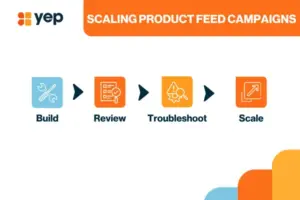
Источник: Yep Ads. Presentation of scaling product feed campaigns.
For ecommerce brands exploring new customer-acquisition routes, this is also part of a bigger shift toward commerce happening inside AI-led experiences. We looked at that trend more broadly in our guide to agentic ecommerce and buying on LLMs.
Conversion Reporting Is Getting More Useful
The reporting update may be less visible than bulk campaign creation, but it could be one of the more valuable changes for performance teams.
OpenAI’s public Insights API documentation allows advertisers to retrieve attributed conversion events even when those events are not what the campaign’s selected conversion goal is.
Consider a simple example.
A campaign might optimize toward Add to Cart because that is the event chosen to be optimized for.
But that doesn’t mean narrow or mean the marketer only cares about add-to-cart activity.
They could try to understand how many purchases were attributed to that campaign.
The updated reporting makes that distinction clearer.
Оптимизация is the event the campaign is honed in on and configured to work toward.
Measurement can include additional attributed events that help marketers understand what happened further down the funnel.
OpenAI’s reporting guidance notes that a campaign can show attributed purchases while optimizing for another event, without changing the campaign’s conversion goal.
That gives marketers a broader view of results without requiring them to restructure a campaign simply to inspect another outcome.
It is especially useful when the customer journey includes several meaningful actions.
For example:
Ad click
↓
Product view
↓
Add to cart — optimization goal
↓
Checkout
↓
Purchase — additional attributed event
The campaign can still optimize around the selected event while the advertiser looks further down the funnel.
That is extremely helpful because campaign optimization and business performance are not always measured using one identical action.
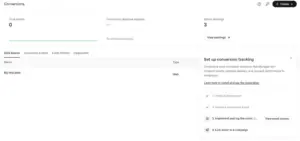
Источник: Yep Ads. Layout example from Ads Manager.
Account, Brand, and Legal Names Are Now Separate
Another update solves a simpler administrative issue.
OpenAI now lets advertisers manage three different names in Ads Manager:
| Name | What it means |
| Account Name | The internal name used to identify the account |
| Brand Name | The public-facing name shown alongside ads |
| Legal Name | The registered business name used for billing and verification |
Previously, the advertiser name entered during setup populated all three.
OpenAI’s account setup guidance explains that these fields can now be changed independently under Settings → General.
That is useful for agencies, international companies, and businesses managing several brands.
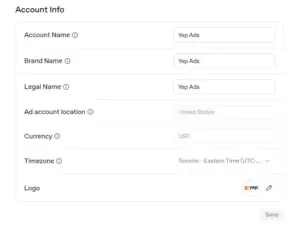
Источник: Yep Ads. Account info example from Ads Manager.
Your internal account might be called US Retail – Q4, for example, while customers see Example Store and invoices sit under Example Holdings Inc.
There are review implications to keep in mind.
Changing an Account Name does not trigger review. A Brand Name change triggers a new brand review and pauses advertising until approval. Changing the Legal Name restarts business review and may also pause serving.
It is a fairly small update, but if you manage several accounts or brands, that means surprisingly less back-and-forth for every small administrative improvement.
ChatGPT Ads Adds Seven More Markets
Great news from our partners in APAC! OpenAI is also expanding ChatGPT Ads across another part of Asia.
Its current Ads Manager availability list now includes:
- Индонезия
- Малайзия
- the Philippines
- Сингапур
- Таиланд
- Vietnam
- Taiwan
That gives international advertisers more markets to consider, but expansion shouldn’t mean simply copying an existing campaign into another country.
Language, creative, product availability, fulfillment, landing pages, measurement, and campaign economics can all differ by market.
A campaign that works in one country could have an adverse effect in another, so thinking about how to adjust your campaign for the population is incredibly important.
For global advertisers, the opportunity is increased reach. The practical work is that thought of making sure the offer and campaign actually fit each market.
This is where a broader digital advertising strategy still matters. A new channel is most useful when it fits the audience, geography, and acquisition goals rather than being tested simply because it is new.
What These Updates Tell Us About ChatGPT Ads
None of these updates introduces a dramatically different ad format.
That is what makes them notable.
Look at the changes together and a clear pattern appears:
| Area | Latest update |
| Scale | Bulk product-feed campaign creation |
| Control | Product review visibility |
| Measurement | Reporting beyond the optimization goal |
| Administration | Separate account, brand, and legal names |
| Reach | Seven additional markets |
OpenAI is filling in more of the operating layer around its ad platform.
The gap between testing a ChatGPT Ads campaign and managing the channel as an ongoing part of a media strategy is beginning to narrow.
That does not make ChatGPT Ads equivalent to longer-established platforms. Ads Manager remains in beta, and advertisers are still learning where the channel fits.
But these are exactly the kinds of tools marketers start looking for once campaign structures get larger to scale and more complicated.
What Advertisers Should Do Next
You do not need to rebuild your media plan because a new Ads Manager update landed.
But if you are already testing ChatGPT Ads, there are a few practical things worth checking.
Ecommerce brands: Review the structure and accuracy of your product feeds, then see whether the new bulk workflow could make campaign expansion easier.
Existing advertisers: Check product review statuses and investigate products that are not eligible to run rather than judging a feed only at the campaign level.
Performance teams: Look at which additional conversion events are available through Insights. Your optimization goal does not have to be the only outcome you evaluate.
Agencies and multi-brand teams: Review Account, Brand, and Legal Names before changing them, especially when a brand or legal-name update could temporarily affect serving.
International advertisers: Evaluate the seven new markets individually. Product availability, localization, and customer-acquisition economics should guide expansion.
What Comes Next?
Earlier ChatGPT Ads developments focused heavily on establishing what advertisers could do on the platform.
The latest updates increasingly focus on making those capabilities easier to operate.
That is a subtle but important shift.
OpenAI continues to work on product advertising, measurement, campaign management, and broader advertiser access. The areas worth watching next are not just new formats, but how easily the platform can fit into the everyday workflows marketers already use.
And for us, that is particularly relevant.
As an OpenAI Select Partner, Yep Ads is continuing to expand how we use AI across the customer journey, from AEO and LLM discoverability to AI-assisted creative, automated workflows, custom AI processes, and emerging opportunities such as ChatGPT Ads.
For us, the goal is simple: use AI where it can make marketing more effective, scalable, and easier to operate.
Заключительные размышления
The latest ChatGPT Ads update is not built around one headline-grabbing feature.
Instead, OpenAI is addressing the work that starts after an advertiser decides to test the platform.
Bulk creation makes larger product-feed structures easier to build. Review visibility helps advertisers understand what can actually run. Expanded conversion reporting provides more context around campaign outcomes. New naming controls make accounts easier to manage.
And with seven additional markets becoming available, more advertisers now have the option to see where ChatGPT Ads fits into their media mix.
Вам также может понравиться
Поделиться
