
Auto Insurance Leads: How to Reach Drivers Ready to Shop
If you are interested in getting more auto insurance leads or want to understand what makes drivers interested in getting a new quote – you’ve came to the right place
At Yep, we’ve put together a few practical tips for improving your landing pages and lead generation forms, drawing on our experience running performance marketing campaigns and seeing what helps turn interest into action.
And there’s plenty of interest to work with. According to JD Power, auto insurance shoppers now collect an average of 3.5 quotes, while 48% of new policies are purchased digitally.
That means your potential customers could already be comparing several options, checking coverage, and figuring out which policy makes the most sense for them. A clear ad, helpful landing page, and smooth quote experience can make your offer a lot more appealing.
So, let’s get into how you can make the most of that shopping activity and bring in more qualified auto insurance leads.
Основные выводы
- Auto insurance shoppers are often comparing several options at once.
- Search behavior can reveal whether someone is researching, comparing, or ready for a quote.
- Clear information can help shoppers understand what they are actually comparing.
- Forms should qualify leads without asking for information you do not need.
- Geography, traffic source, and shopper behavior can all help shape smarter campaigns.
Help Shoppers Compare Without Giving Them Homework
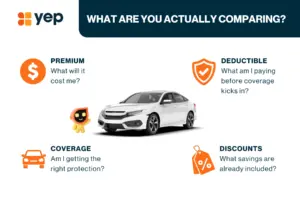
Price gets plenty of attention in auto insurance, but a shopper still needs to understand what that price includes.
Is the deductible different? Are the coverage limits the same? Was a discount applied to one quote but not another?
In a 2026 digital study, JD Power found that shoppers were nearly twice as likely to consider purchasing when price comparisons were available: 39% versus 21% without them.
That is a useful clue for your campaign. You do not necessarily need a giant comparison tool, but you can give people more context around what they are seeing.
If your ad focuses on price, explain what goes into the quote. If you’re talking about coverage, make the differences easy to understand. A shopper with three other tabs open will probably appreciate not needing a spreadsheet to decode yours.
Looking to Grow Your Auto Insurance Campaigns?
Whether you’re looking for better ways to reach insurance shoppers, Yep can help you to get auto insurance leads
Advertisers: Talk to Yep about auto insurance lead generation.
Publishers: Have relevant insurance traffic? Let’s see where it fits.
Let the Search Tell You What They Need
Auto insurance searches can be surprisingly revealing.
Someone searching “collision vs comprehensive” may still be figuring out their coverage. Someone searching “compare car insurance rates” is actively shopping. And “auto insurance quote Florida” gives you both strong intent and a location.
Those people probably should not all land on the exact same experience.
Yep’s guide to Google Ads for lead generation covers how search intent can shape keywords, ads, and landing pages. For auto insurance, that might mean answering a coverage question first, making comparison easier for someone shopping around, or taking a high-intent search directly into a relevant quote experience.
Let the wording of the search help you decide what conversation comes next.
Answer a Few Questions Before Asking Your Own
A quote form does not always need to be the first thing someone sees.
Insurance has plenty of terminology, and shoppers may still be sorting through what different options mean.
Helpful content can clear up some of that uncertainty before you ask someone for their information.
You might explain:
- What someone needs before getting a quote
- Why two quotes can have different prices
- Collision vs. comprehensive coverage
- How deductibles can change
- What to check when comparing policies
Здесь же native advertising can work nicely. You have enough space to answer the question that brought someone there and introduce the next step naturally.
No insurance textbook required.
Make Every Form Question Earn Its Spot
Once someone is ready for a quote, you obviously need enough information to understand whether they fit the campaign.
That could include their ZIP code, vehicle details, current insurance status, household drivers, or coverage needs.
The trick is knowing where useful qualification turns into unnecessary work.
If ZIP code determines eligibility, ask it. If vehicle details affect the opportunity, they make sense too. But if nobody can explain why Question 16 is still on the form, it might be time to have a chat with Question 16.
For campaigns involving multiple buyers, ping-post lead generation can also help evaluate lead information against buyer requirements and route opportunities accordingly.
Pay Attention to Where the Driver Lives
Auto insurance campaigns can behave very differently from one market to another.
Regulations, insurer availability, competition, pricing conditions, and buyer demand can all vary by state. An advertiser may want more volume in one region and have little appetite for another.
That makes geography useful beyond simply choosing where an ad runs.
Look at which locations are producing meaningful opportunities, which searches appear there, and whether the messaging fits what shoppers in those markets are looking for. Yep’s search traffic solutions already work across insurance and other high-intent verticals where both location and search behavior can influence campaign strategy.
Make the Click Worth Their Time
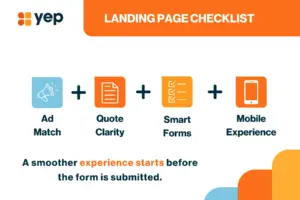
Getting a driver interested enough to visit your landing page is a good start. Now you’ve got to give them a reason to stick around.
Auto insurance shoppers are often comparing several options, so your landing page should make it easy to understand what’s being offered and how to get started. Keep the messaging relevant to the ad, explain what shoppers can expect, and make sure the form only asks for information that helps move the quote process forward.
And here’s something worth testing: how much information you ask for upfront. A shorter form may encourage more submissions, while a few additional qualifying questions could help you attract leads that better match the advertiser’s requirements. The sweet spot depends on your campaign, so let the results guide you.
Keep Learning From the Campaign
Once leads start coming in, pay attention to what they are telling you.
Which searches are producing strong opportunities? Are certain states performing particularly well? Is one publisher finding shoppers who continue further into the quote process? Does one creative angle consistently outperform another?
Those patterns can guide where you spend, what you test, and what you show the next group of shoppers.
Yep’s program analytics capabilities help connect performance back to traffic sources, audiences, and creative so those decisions can be based on what is actually happening.
How Yep Fits In
Auto insurance lead generation has plenty of moving parts, and bringing them together is something we know well.
Through our lead generation and management solutions, we work with advertisers to understand their targeting and lead requirements. Our verified publishers drive traffic through search, social, and native to approved landing pages, where interested drivers can submit their information.
Advertisers can then bid on incoming leads that match their criteria, helping connect each opportunity with the right buyer.
We also keep a close eye on which markets, campaigns, and traffic sources are performing best, using those insights to improve lead quality and help advertisers scale.
If you are looking to run auto insurance campaigns, consider reaching out to [email protected] for any inquiries.
Часто задаваемые вопросы
What are auto insurance leads?
Auto insurance leads are prospective customers who have shown interest in comparing, purchasing, or switching auto insurance and provided information that allows an insurer, broker, agent, or advertiser to continue the process.
How do you generate auto insurance leads?
Auto insurance leads can come from search, social, native advertising, publishers, content, comparison experiences, and other performance channels. The right mix depends on the market, audience, qualification requirements, and where the shopper is in their decision.
What makes an auto insurance lead high quality?
That depends on the advertiser, but a useful lead generally fits the required geography and eligibility criteria, provides accurate information, and comes from someone genuinely interested in exploring an insurance option.
How much do auto insurance leads cost?
There is no universal cost. CPL can vary based on geography, competition, traffic source, qualification criteria, shopper intent, exclusivity, and the campaign model.
Заключительные размышления
People shopping for auto insurance already have enough numbers, coverage terms, and quote options competing for their attention.
A good campaign can make that process a little easier. Understand what the shopper is trying to figure out, give them useful information where it helps, and make the next step clear when they are ready to take it.
That gives you a much better foundation for generating auto insurance leads that make sense for both the shopper and the advertiser.
Вам также может понравиться
Поделиться
