
Solar Leads: How to Reach Homeowners Ready to Take the Next Step
If you are getting ready to run solar ads, you probably already know there are homeowners interested in solar.
The harder question is: how do you find the ones who are actually worth reaching?
Maybe someone just got another expensive electricity bill. Maybe their neighbor installed panels and now they are curious. Maybe they have already opened five tabs comparing local installers and are finally ready to request a quote.
Those people are all interested in solar, but they are at very different points in the journey.
That is where your campaign comes in.
The better you understand what your ideal homeowner is thinking, where they live, what they are searching for, and what they need to know before taking the next step, the easier it becomes to build solar ads that feel relevant instead of generic.
Основные выводы
- Solar interest often begins with a very practical question about a home, roof, electricity bill, or local installation options.
- Geography matters enormously because installers can only serve the markets where they actually operate.
- Поиск can catch people already looking for answers, while social, native, and publisher content can introduce solar earlier in the decision.
- Strong solar campaigns make it easy for people to move from “Could solar work for me?” to “Let’s find out.”
Solar Leads Usually Start With a Question
Most people do not wake up ready to request a solar quote. Usually, the interest starts with a much simpler question.
Could panels work on my roof? Would they make a difference to my electricity bill? Who even installs solar in my area?
Sometimes it starts even more casually. One house on the street gets panels, the neighbors notice, and suddenly solar becomes a conversation. The power of word-of-mouth in a close-knit neighborhood brings a ton of value.
Those little moments of curiosity matter because they show where someone is on the journey. A person researching how solar works is still exploring, while someone comparing local installers or requesting an estimate is much closer to taking action.
For marketers, that creates plenty of room to meet people at the right stage with useful information, rather than sending everyone straight to the same quote form.
The Roof Matters More Than You Might Think
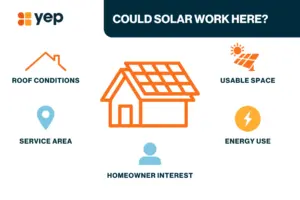
Solar is a great fit for digital lead gen, the click happens online, but the actual product ends up bolted to a building.
That means the property itself matters.
The U.S. Department of Energy’s homeowner solar guidance notes that factors such as roof age, shade, size, shape, and slope can influence whether rooftop solar is a good fit.
For marketers, that creates an interesting opportunity.
Instead of asking generic questions like “Are you interested in solar?”, content and landing pages can help people think about their own situation:
- Is the roof heavily shaded?
- Is it due for replacement soon?
- Is there enough usable space?
- Is the property within an installer’s service area?
- Is the homeowner looking at solar alone or solar plus battery storage?
You do not need all of that information before someone can raise their hand. But solar campaigns become far more useful when the marketing acknowledges that every rooftop is a little different.
Geography Does a Lot of the Heavy Lifting
Before you spend a dollar on traffic, get clear on exactly where you can install. Solar is incredibly local, and broad targeting can quickly send your budget into places your sales team cannot even serve.
A brilliant campaign can still become fairly useless if it fills an installer’s inbox with homeowners 400 miles outside the service area.
That is why geography deserves more attention than simply choosing a state in an ad platform.
A solar company might serve:
- specific cities
- certain counties
- selected ZIP codes
- a radius around installation teams
- several separate markets with different offers
That can affect the ad, the landing page, the publisher mix, and even the questions being asked.
“Solar installer in Texas” is broad.
“Solar installation in Austin” tells you much more.
For publishers, that creates opportunities for genuinely useful local content too. Regional guides, local installation questions, area-specific energy concerns, and location-based comparisons can be far more relevant than another generic article explaining that solar panels use sunlight.
Search Lets People Tell You What They Want
Search is particularly fun in solar because the query can reveal a lot.
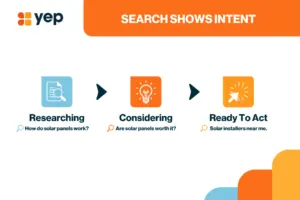
Compare:
“How do solar panels work?”
with:
“Solar installer near me.”
One sounds like research. The other sounds like somebody has started opening tabs.
That makes search a natural channel for solar leads because people can effectively announce what they are trying to solve.
Yep’s guide to Google Ads for lead generation covers the broader role search can play in capturing people already looking for a solution.
For solar specifically, the trick is keeping the experience connected.
If someone searches for a local quote, show them a local quote path.
If they are researching roof suitability, answer that question first.
If they are comparing solar and battery options, do not drop them onto a generic homepage and make them start again.
Every extra scavenger hunt is another chance for that tab to close.
Social and Native Can Start the Conversation Earlier
Not every homeowner is actively Googling installers.
Sometimes the job is simply getting solar onto their radar.
This is where social and native advertising can prove interesting to use. Native formats in particular give publishers and advertisers room to explain an idea before asking someone to act.
Solar has plenty of stories worth exploring:
- What can make a roof suitable for solar?
- Why do electricity costs make some homeowners start researching panels?
- How does battery storage fit into a home solar setup?
- What should someone know before requesting an installation estimate?
- What questions should they ask an installer?
That is far more interesting than placing a picture of panels beside a giant button saying SAVE ON ENERGY and calling it a day.
The content earns genuine curiosity from readers, then the lead can come afterward if they are convinced.
Make “What Happens Next?” Really Obvious
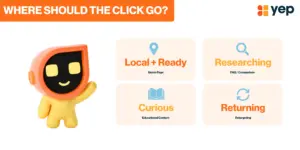
A homeowner who is curious about solar may still have no idea what happens after submitting a form.
Do they get a phone call?
Is someone coming to inspect the roof?
Do they need an electricity bill ready?
Are they requesting a quote or simply asking for information?
Clear campaigns answer those questions before uncertainty gets the chance to creep in.
A simple landing page might explain:
- Tell us a little about the property.
- Share your preferred contact details.
- Speak with a solar professional about the options available in your area.
The form itself should stay equally sensible. Location and basic property information can help determine whether someone fits the offer. Twenty-three questions about every inch of the roof probably belong later in the conversation.
Give People Something Useful Before Asking for the Lead
This is probably the biggest opportunity to make solar campaigns more interesting.
Solar already gives marketers plenty to talk about.
A publisher could build a simple roof-readiness checklist.
A paid social campaign could explain three things homeowners usually want to know before requesting an estimate.
A native article could walk through what an installation consultation typically involves.
An interactive experience could ask a few basic questions about location, property type, and solar goals before suggesting the appropriate next step.
Now the marketing is doing some work for the reader.
That matters because solar is a considered purchase. The more useful the experience feels, the more natural it becomes for someone to continue the conversation.
Solar Is Still a Big Conversation
There is also plenty happening in the market itself.
The latest U.S. Solar Market Insight reports that the United States installed 11.4 GWdc of solar capacity in Q2 2026, with total operating solar capacity now enough to power roughly 50 million homes.
Residential solar is moving through a period of adjustment in 2026, which makes current consumer messaging especially important. Instead of assuming yesterday’s pitch will keep working forever, marketers can pay attention to the questions people are asking now and build campaigns around those.
Solar has never been short on things to talk about.
The opportunity is making those conversations useful enough that somebody wants to keep going.
Where Yep Ads Fits
Solar lead generation can involve search, native content, publishers, social traffic, calls, and different geographic audiences, which makes performance partnerships particularly useful.
Yep Ads works with brands and publishers across генерация лидов, helping connect campaigns with traffic sources that fit the offer and audience. Yep’s publisher network also works across verticals including home services and lead generation.
For solar brands, that can mean finding new ways to reach homeowners in the markets that matter.
For publishers, it creates room to approach solar through useful content, local intent, and different traffic strategies rather than relying on one generic pitch.
And thankfully, nobody needs to make another ad with a stock photo of someone pointing enthusiastically at a roof.
Часто задаваемые вопросы
What are solar leads?
Solar leads are people or businesses that have shown interest in solar products or installation and provided information that allows a solar provider or marketer to continue the conversation.
How can you generate solar leads?
Solar leads can come through search advertising, organic content, social media, native advertising, affiliates, publishers, referrals, and call-based campaigns. The best channel depends on whether you want to capture active demand or introduce solar earlier in the research process.
What information is useful for a solar lead?
Location, property ownership, basic property details, solar interest, and contact information can all be useful. The exact questions should depend on what the solar provider actually needs before continuing the conversation.
Why is location important for solar leads?
Solar installation is a local service. Installers often operate within specific cities, counties, ZIP codes, or service territories, so reaching homeowners in the right area can make a campaign much more relevant.
Заключительные размышления
Solar marketing gets a lot more interesting when you build around the questions homeowners are already asking.
Help someone understand their roof. Answer the local question. Explain what happens after a quote request. Give them enough useful information to decide whether they want to keep exploring.
Do that well, and the lead feels less like something the campaign squeezed out of a form and more like the natural next step in a conversation.
For brands exploring performance-based solar campaigns, Да can help connect the right offer with the right traffic.
Вам также может понравиться
Поделиться
