
How to Start Affiliate Marketing With No Money in 2026
Starting affiliate marketing can progressively get more expensive pretty quickly. You look up how to get started and apparently you need a website, hosting, keyword tools, editing software, tracking platforms, paid ads, and a course to explain how to use everything you just bought.
The good news is that most of that can wait and it really depends on the scale you perform on.
If you’re figuring out how to start affiliate marketing with no money, you can start on a more calm level. You need an audience to help, something relevant to recommend, and a tracked link that connects the two. Instead of spending money upfront, what you’ll be spending is time on research, content, and testing.
The goal isn’t to build a perfect affiliate business on day one. It’s to prove that there is genuine interest from people before you start paying to scale it.
Основные выводы
- You can start without paid traffic, premium tools, or a custom website.
- Focus on one audience and one main traffic source first.
- Pick offers based on relevance, not just commission size.
- Create useful content before worrying about scaling.
- Reinvest once you know what’s actually working
Start With a Problem, Not a Product
What lots of people start with is to find an affiliate product and try to work backwards to figure out who might want it. That can work, but it’s a whole lot easier to begin with a group of people who already have questions.
Think about first-time renters choosing affordable home products, runners looking for beginner shoes, travelers comparing carry-on gear, or small businesses trying to choose software.
Those audiences already made up their mind on a decision, which gives you useful content to create before an affiliate link even enters the picture.
A quick test is to ask whether you could think of any 15-20 actually helpful content ideas for the audience without promoting anything. If you can, those are your building blocks to go more in depth with.
If you’re still deciding what kind of affiliate you want to be, Yep’s guide on who can become an affiliate is a useful starting point.
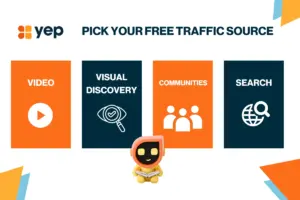
Pick One Free Traffic Source
Источник: Yep Illustrated Infographic
You don’t need to go crazy with all the different platforms thinking you need the most reach. You don’t need a website, TikTok, YouTube, Pinterest, Instagram, and an email list at the same time.
Start with the channel that fits how you naturally create content and how your audience searches for information.
Short-form video works well for products that are easy to demonstrate, compare, or explain quickly.
YouTube makes sense when buyers need more detail before making a decision, especially for tutorials, reviews, and comparisons.
Search content can work well for recurring questions with long-term demand. If you decide to go this route, Yep’s guide to affiliate SEO goes deeper into building organic traffic.
Pinterest has a great place for visual niches such as home, travel, fashion, food, and DIY.
Communities like Reddit and forums can also be useful, mainly for research and a quick fix. They show you what people are asking, which products keep coming up, and what problems aren’t being answered well. Treat them as a source of audience insight rather than somewhere to drop links.
Find Offers That Actually Fit
Commission size matters, but you shouldn’t get stuck on that first.
A high-paying offer is not very useful if your audience is unrelated and has no reason for it. In many cases, a smaller commission on a product people are actively looking for can be much easier to work with.
When comparing affiliate opportunities, look at:
- Product relevance
- Brand familiarity
- Commission structure
- Attribution window
- Geographic availability
- Promotional restrictions
- Payout requirements
- Tracking quality
You can work directly with brands, join affiliate programs and agencies like Yep, or work with performance marketing partners.
Yep has a whole network of publishers across different verticals, traffic sources, and GEOs, helping match offers with audiences where there is a genuine fit.
Use What You Already Have
Источник: Yep Illustrated Infographic
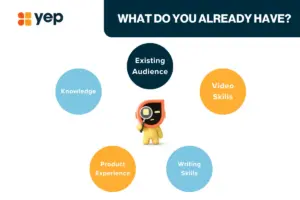
Starting with no money becomes much easier when you stop thinking about what you need to buy and start with the tools already at your disposal.
That might be:
- A phone you can create content with
- Knowledge about a product category
- Experience with a hobby or industry
- A social account with even a small audience
- Writing, design, video, or research skills
- Access to communities where you can learn what people are interested in
You really don’t need all of these as only one or two can be enough to choose your starting direction.
For example, someone who already knows a lot about PC hardware could create comparisons and buying guides. Someone comfortable on camera might be better suited to short-form product content. If writing is your strength, search-based content may make more sense.
The point is to play with your skills and build on them instead of spending money trying to create one.
What To Would Do With $0
Say you are starting today with no budget, try to keep the first month simple.
Week 1: Pick one audience and collect 15–20 questions they regularly ask before buying.
Week 2: Find two or three affiliate offers that genuinely fit those questions.
Weeks 2–3: Create several pieces of useful content on one main platform.
Week 4: Review which topics attracted attention, clicks, questions, and conversions, then make more around the strongest signals.
The goal after the first month shouldn’t be to try to figure everything out but to know more about what your audience responds to than you did when you started.
What Can Wait
A lot of things become useful later, but for this first setup, they can create a financial burden.
You can probably hold off on:
- Premium SEO subscriptions
- Expensive cameras
- Advanced affiliate tracking software
- Paid traffic
- A large custom website
- Courses promising a fully automated income system
Spend once you know what problem the money is solving.
If video editing is slowing you down, better tools might help. If search traffic is growing, investing in your site may make sense. If organic traffic is already converting, paid acquisition could eventually become worth testing.
That is much more useful than buying everything before you’ve published anything.
Why Don’t Different Tracking Platforms Always Match?
Seeing slightly different numbers across two dashboards isn’t unusual.
Systems can differ in how they:
- define conversions;
- handle attribution windows;
- record timestamps and time zones;
- filter invalid or duplicate events;
- process delayed conversions;
- identify traffic;
- apply attribution rules.
There can also be actual tracking problems, including missing parameters, broken integrations, duplicate events, or conversions that aren’t being passed correctly.
The important part is understanding what each platform is measuring before deciding that a difference is leading to something wrong being done.
FAQ
Can you start affiliate marketing with no money?
Yes. You can start with free traffic sources, existing social platforms, basic content tools, and affiliate programs that do not charge you to join. The trade-off is that you will rely more on your time, skills, and consistency instead of paid advertising or premium software.
Do you need a website to start affiliate marketing?
Not at all. You can start through platforms such as YouTube, TikTok, Instagram, Pinterest, or other channels that allow affiliate promotion. A website can become useful later, especially for SEO and long-term content, but it is not required on day one.
What is the best free traffic source for affiliate marketing?
There really isn’t a single best option. Video platforms work well for demonstrations and reviews, while search-focused content is better for people researching specific questions. The best starting point is usually the platform that matches both your skills and how your audience looks for information.
How do beginners find affiliate programs?
Start with brands, affiliate networks, and performance marketing partners that fit your niche and audience. Before applying, check their traffic requirements, GEOs, commission structure, payout terms, and promotional rules so you know the program actually fits how you plan to promote it.
When should you start spending money on affiliate marketing?
Spend when you can clearly identify what is holding you back. That might be better content tools, a website, SEO software, or eventually paid traffic. There is little value in buying premium tools before you know which part of your affiliate strategy is actually working.
Заключительные размышления
You can start affiliate marketing without much money, but you still need a clear vision of your audience, useful content, relevant offers, and enough patience to learn from the results.
When you are starting small, always utilize the free tools already available to you, and focus on proving that people actually care about the topic and the offer.
Once that happens, what you spend money on becomes easier because you’ll know where it can actually improve performance.
Да helps publishers connect with performance-focused campaigns across a range of verticals, GEOs, and traffic sources. If you’re ready to explore opportunities beyond your first few affiliate links, that is where a stronger partner network can start to matter.
Вам также может понравиться
Поделиться
