
Google’s March 2026 Core Update, Explained
If you logged into your analytics in late March and did a double-take, you weren’t imagining things. Google’s March 2026 core update was one of the bumpiest in recent memory, even rougher than the December 2025 update that already had a lot of brands sweating.
The short version? Google reshuffled almost everything at the top of search, and it’s the latest entry in a string of shifts shaping how marketers plan for 2026 it rewarded a very specific kind of website. The good news: once you understand what it favored, the steps for bouncing back (or staying ahead) is clear. Let’s break it down without a headache.
Основные выводы
- Nearly 80% of top-3 results changed position after the March update, a huge jump from December’s volatility.
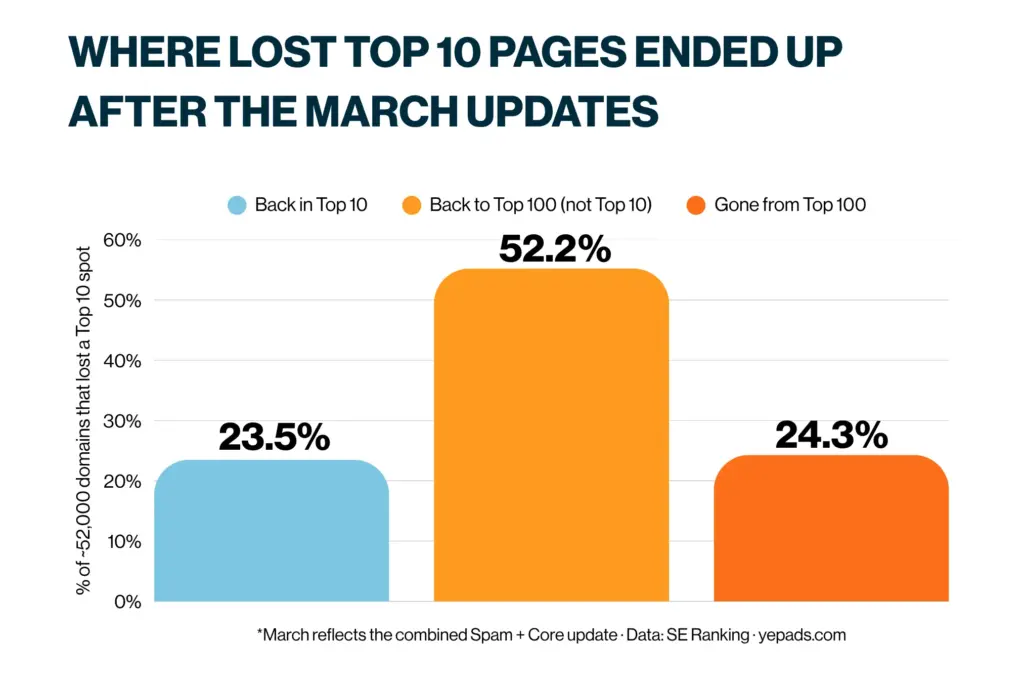
- Roughly 1 in 4 pages that were ranking in the top 10 dropped out of the top 100 entirely.
- Mid-tier pages broke through: almost 30% of new top-3 results came from outside the top 20, more than double December’s 13%.
- Winners: official sites, established brands, niche specialists, and data-rich sources.
- Losers: aggregators, directories, and comparison-style “middleman” pages.
- How to adapt: lean into owned content, first-hand experience, first-party data, and a brand people search for by name.
Оглавление
- What Is a Core Update, Anyway?
- How Much Did Rankings Actually Move?
- Who Won and Who Lost?
- How Do You Adapt Your Strategy?
- Вопросы и ответы
- Заключительные размышления
What Is a Core Update, Anyway?
A “core update” is one of Google’s big, broad tune-ups to how it ranks pages not a tweak to one niche, but a rethink of what “good” looks like across the whole web. Google runs these a few times a year, and each one can move traffic in a big way.
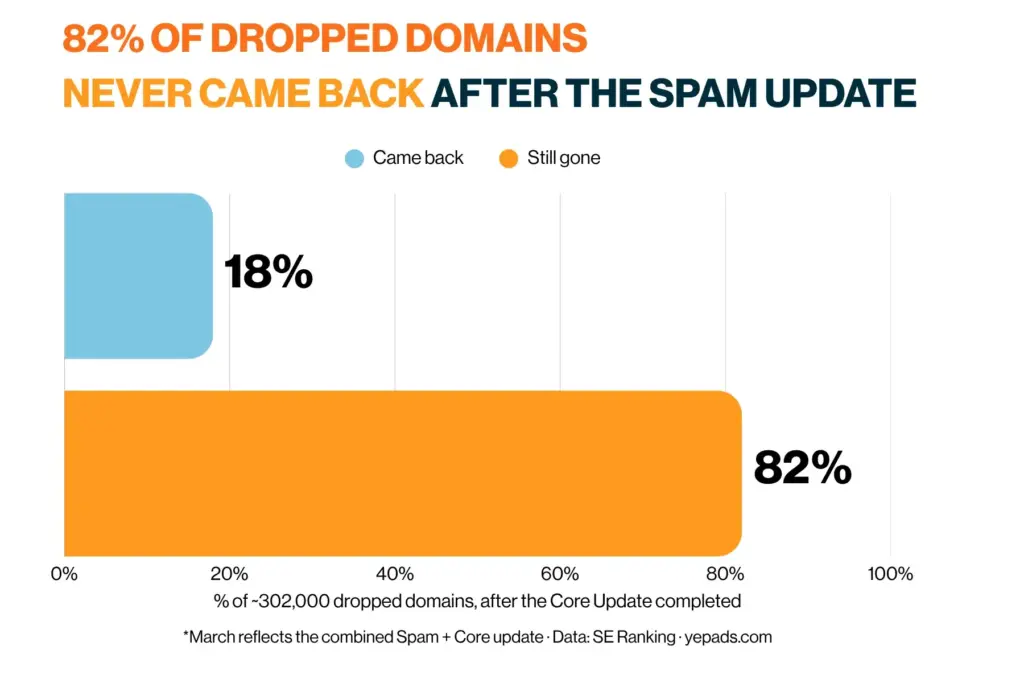
The March 2026 update landed right after a separate spam update finished rolling out, which made things extra messy. (More on that in a second.) The result was a lot of movement, fast. According to data from SE Ranking shared with Search Engine Land, this update created noticeably more shake-up than December’s.
One thing worth knowing: because the spam update and the core update overlapped, it’s a little tricky to say exactly which one caused what. Most of the movement was likely the core update doing its thing, with the spam update turning up the volume.
How Much Did Rankings Actually Move? (The Numbers)
Here’s what the numbers actually mean for you, in everyday terms:
How much did the top of search get reshuffled?
О нас 80% of the top-3 spots changed hands (up from roughly two-thirds in December). Translation: even the “safe” positions weren’t safe. And the higher up you look, the bigger the gap every ranking tier saw more movement in March than it did in December.
Where did the new top-3 results come from?
Here’s the flip side of all that movement: nearly 30% of the new top-3 results came from pages that had been sitting outside the top 20, more than double December’s 13%. So instead of just reshuffling the usual leaders, March pulled pages up from much lower positions. If you’ve been stuck on page two, that’s encouraging.
How many top-10 pages disappeared completely?
Around 24% of pages that were sitting in the top 10 fell all the way out of the top 100, up from 14.7% in December. That’s the part that stings, and it’s nearly double the December rate.
Sources: Yepads, SE Ranking
Who Won and Who Lost?
A few real examples from the analysis make the trend click:
- Jobs: Aggregators like ZipRecruiter and Glassdoor slipped, while employer-direct sites and specialized platforms like USAJobs and Amazon.jobs climbed.
- Health: Broad consumer-health sites declined, while clinical and research-driven sources gained Google clearly wants authoritative answers on health.
- Reference: Smaller dictionary and language sites dipped, while larger reference platforms held strong.
- Travel & real estate: Visibility shifted from broad discovery platforms toward stronger brands and primary destinations.
A common theme In almost every category, the source beat the summarizer.
How Do You Adapt Your Strategy?
So if Google is rewarding original sources, specialists, and recognizable brands, the to-do list writes itself: become more of those things, and less of a middleman. Here’s the encouraging part that’s a fixable gap, not a penalty. Four practical moves, each aimed straight at the traits that won:
- Build on owned content and first-hand experience. This is the direct answer to the “source beats summarizer” pattern. Publish things only you can say original testing, real results, behind-the-scenes know-how, which is exactly why UGC in affiliate marketing has been gaining ground as a content format. If your page reads like it could’ve been assembled by anyone, that’s the gap to close.
- Use first-party data. Remember the data-rich sites that gained? You can be one. Your own numbers, surveys, and case studies are gold right now Google loves pages it can’t find anywhere else, and so do readers.
- Become a brand people search for by name. Established brands held strong for a reason: branded search demand is a strong signal of trust. The more people look for you specifically, the more resilient you are when the algorithm shifts. If you’re an affiliate or publisher, this is where pointing genuine, experience-backed work at the right offers pays off quality and earns durable visibility. It’s also exactly the kind of durable positioning brands look for when recruiting affiliates established authority is what makes a publisher worth partnering with in the first place.
- Go deeper, not wider. Specialists gained across the board, so don’t cover everything lightly on a topic completely. Depth is what separates a destination from a directory.
If your model leans on aggregator- or comparison-style pages, don’t panic but do treat this as the nudge to add real depth, first-hand insight, and a recognizable name to the mix. If you’re building that kind of destination from scratch as a publisher, our guide on how to start an affiliate program walks through the foundational steps, and SEO explained for affiliates covers how to structure that content so it actually ranks.
Вопросы и ответы
Was the March 2026 update worse than December’s?
By most measures, yes it created more ranking volatility across the board, with nearly 80% of top-3 results changing position versus about two-thirds in December.
Why did some sites disappear from the top 100 completely?
Google re-weighted what it considers high-quality. Pages that mostly aggregated or summarized others’ information were more likely to drop sharply, while original, authoritative sources gained.
If I lost rankings, is the drop permanent?
Not necessarily. Core update impacts can recover as you improve content quality, depth, and originality. Google has long said there’s no quick “fix” the path back is genuinely better, more first-hand content.
Does this mean comparison sites are done?
No. It means comparison and directory pages need to offer something original, real testing, proprietary data, or expert analysis rather than just collecting info that lives elsewhere.
How long should I wait before judging the impact?
Give it a few weeks after the rollout fully completes before drawing conclusions, since rankings can stay choppy while the update settles.
Заключительные размышления
The March 2026 core update raised the bar and honestly, that’s good news if you’re building the right way. Owned destinations, first-party data, and a brand people trust are exactly what came out on top proof that the brand-building side of the equation pays off even in channels as short-term-feeling as organic search. Intermediaries are feeling the squeeze, but the steps moving forward are clear, go deeper in blogs, get first-hand information, and build a name worth searching for.
As a global performance marketing agency, Yep Ads helps brands scale through results-driven campaigns and a network of trusted publishers and affiliates. Whatever the algorithms do next, our focus stays the same: connecting brands with the right audiences and helping them grow.
Ready to grow your brand through performance marketing that delivers? See what we do.
Вам также может понравиться
- Media Buying Explained: Where to Buy Ads in 2026
- What Is an Affiliate Marketing Agency? How to Pick the Right One
- How to Start an Affiliate Program: A Step-by-Step Guide for Brands and Small Businesses
- How to Get Affiliates: 12 Proven Strategies to Grow Your Program in 2026
- What Is Brand Awareness? Why It Matters and How to Grow It
- What Do You Do to Increase Lead Quality?
Поделиться