
What Is Brand Awareness? Why It Matters and How to Grow It
When your audience already knows your brand, every campaign has a stronger foundation to perform and scale.
This is exactly where brand awareness changes the game. When people already know your brand, they are more likely to trust you, purchase your products and services, click on your offers, and choose you over competitors, even in highly competitive markets. In fact, research shows that 59% of consumers prefer buying from brands they already recognize, highlighting how familiarity directly influences purchasing decisions.
We gathered in this article expert insights from our team on how brand awareness actually builds and how performance marketing accelerates it. Let us walk you through some strategies and ideas for your brand to scale faster.
Key Takeaways
- Brand awareness makes marketing more effective.
- Familiar brands are more likely to be chosen.
- Awareness grows through repeated exposure.
- Performance marketing accelerates brand awareness.
- Strong awareness improves growth efficiency
Table of Contents
- What Is Brand Awareness
- Why Brand Awareness Matters
- How Brand Awareness Influences Decisions
- Benefits of Strong Brand Awareness
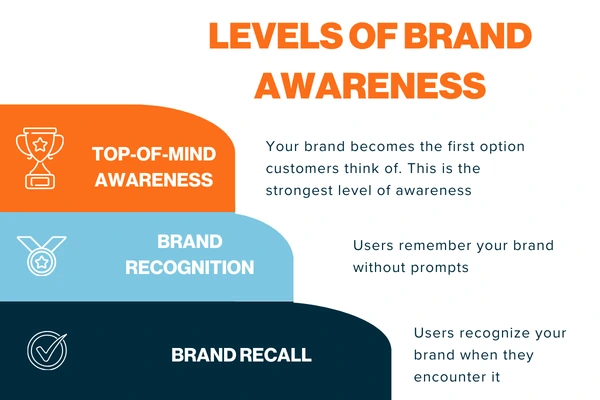
- Levels of Brand Awareness
- Brand Awareness Examples
- How to Build Brand Awareness
- Why Performance Marketing Builds Awareness Faster
- How to Measure Brand Awareness
- Common Brand Awareness Mistakes
- How Yep Ads Helps Brands Grow Awareness
- FAQ
- Final Thoughts
What Is Brand Awareness
Brand awareness means how easily people recognize and remember your brand when they see it or need a product in your category.
This includes recognition of your brand name, product, and reputation, all of which influence how comfortable customers feel choosing your brand.
Brand awareness is built through repeated exposure. Studies show that consumers typically need between 5 and 7 interactions with a brand before they remember it, which explains why consistent visibility across marketing channels is essential. Some may think that this is too hard, as how do I make consumers interact with my brand at the first point, but interaction doesn’t mean they have to make a purchase right away. Let’s dive deeper into some examples of what counts as an interaction:
- Seeing a display or native ad: Someone sees your brand mentioned in a native article or banner ad while reading a website. Even if they don’t click, they notice your brand name.
- Seeing your brand in Google search results or affiliate website: It can be a paid ad or organic search result; even if they don’t click, the exposure counts.
- Hearing about your brand from a creator, influencer, or even seeing it in their content
- Visiting your website (even briefly)
- Seeing your brand on social media
- Seeing your brand mentioned in a review, forum, comparison site, or blog.
- Offline interactions
The more often people see your brand, the more natural and trustworthy it feels to them.
Why Brand Awareness Matters
One thing we consistently see when brands begin scaling is this: Brand awareness has a direct impact on how easily you acquire customers, how well your campaigns convert, and how efficiently you can scale.
When customers already recognize your brand, they are more likely to engage with your marketing and complete purchases. Research from Nielsen shows that increasing brand awareness by just one percentage point can lead to a one percent increase in sales, demonstrating the direct financial impact awareness can have on business growth.
How Brand Awareness Influences Decisions
Think about your own behavior when browsing online. When you see a brand name you recognize, you immediately feel more comfortable clicking on it.
This behavior is supported by research showing that 82% of consumers are more likely to click on a brand they recognize in search results, even if it does not appear in the top position, which demonstrates how familiarity directly impacts user behavior.
Brand awareness reduces uncertainty and increases confidence, both of which influence conversion decisions.
This becomes even more important in competitive verticals like software, fintech, and mobile apps, where users compare multiple options before making a decision, and customers compare multiple providers before choosing.
Benefits of Strong Brand Awareness
Building brand awareness creates measurable business advantages.
- Higher conversion rates: Customers convert more easily when they recognize your brand because trust already exists.
- Lower acquisition costs: Marketing becomes more efficient when audiences are already familiar with your brand.
- Better affiliate and partner performance: Affiliate marketing depends heavily on trust. Studies show that 92% of consumers trust recommendations from people they know, which explains why affiliate and creator partnerships are effective awareness channels.
- Stronger revenue performance: Consistent brand presentation across channels has been shown to increase revenue by up to 23%, highlighting the long-term financial value of strong brand awareness.
- Higher customer trust: Brand trust plays a major role in purchasing behavior. Research shows that 82% of shoppers base their purchase decisions on trust in the brand, reinforcing the importance of awareness and credibility.
How to Build Brand Awareness
If your goal is to grow your brand, you need consistent exposure across multiple trusted channels so your audience sees your brand repeatedly in different environments. The more often people see your brand in relevant contexts, the faster familiarity develops and the easier it becomes for them to trust and choose you.
Some strategies build awareness faster than others, while some take longer but provide long-term stability. Obviously, the strategy varies based on the goals and budgets, but there are some common trends that we see among the brands our partners or we are working with.
Below, we gathered our perspective on the most effective brand awareness channels, ranked from fastest impact to long-term foundation. What we are seeing is that the fastest-growing brands do not rely on just one channel. Instead, they combine
1. Performance Marketing and Affiliate Partnerships
Performance marketing is one of the fastest ways to build brand awareness because it places your brand directly in front of new audiences through publishers, creators, comparison sites, and review platforms that already have established traffic.
Partners introduce your brand to their audiences, and awareness grows faster.
If you want to expand your brand globally, working with a performance marketing agency like Yep Ads allows you to reach trusted partners across multiple markets.
It’s actually a win-win situation when it comes to brand awareness and performance marketing. Brand awareness also strengthens performance marketing. Affiliate partners, publishers, and creators prefer promoting brands that audiences recognize because familiar brands convert more consistently.
Without awareness, every campaign must build trust from scratch. With awareness, trust already exists.
2. Paid Advertising
Paid advertising helps brands build awareness quickly by delivering immediate visibility across large audiences.
This includes:
- Native advertising
- Display advertising
- Search ads
- Social media ads
- Video advertising
Even when users do not click, seeing your brand repeatedly increases familiarity.
Paid advertising is especially effective when launching new products or entering new markets because it accelerates initial exposure. If you are new to performance marketing, and you’d like to understand the difference between paid ads, check out this article:
3. Influencer and Creator Partnerships
Creators and influencers help accelerate awareness because they introduce your brand to audiences that already trust their opinions.
When creators feature your brand in:
- YouTube videos
- TikTok content
- Instagram posts
- Podcasts
Their audience becomes aware of your brand through a trusted source.
This trust transfer makes influencer marketing one of the most effective awareness channels.
Search Engine Optimization (SEO) and Content Marketing
SEO builds brand awareness by helping your brand appear in search results when users research topics related to your product.
For example, when your brand appears in:
- Google search results
- Educational blog posts
- Product guides
Users discover your brand naturally.
SEO takes longer to build, but it provides consistent awareness over time without requiring ongoing advertising spend.
This is why SEO is considered a long-term awareness foundation.
Social Media Presence (Consistent Awareness Reinforcement)
Social media helps maintain ongoing awareness by keeping your brand visible in everyday environments.
When users regularly see your brand in their feeds, it reinforces familiarity.
This includes:
- Organic posts
- Short-form video content
- Community engagement
Social media is especially effective for maintaining awareness after initial discovery.
Public Relations and Media Coverage (Authority and Credibility)
Media coverage introduces your brand to new audiences while also strengthening credibility.
This includes:
- Press mentions
- Interviews
- Industry publications
- News features
Being featured in trusted media increases brand recognition and perceived authority.
Product Experience and Word-of-Mouth (Strongest Long-Term Impact)
One of the most powerful drivers of brand awareness is customer experience.
When customers have positive experiences, they naturally recommend brands to others.
This leads to:
- Referrals
- Reviews
- Organic discussions
Research shows that people trust recommendations from others more than traditional advertising, which makes word-of-mouth a critical awareness driver.
Although this develops gradually, it creates the strongest long-term brand awareness.
How Brand Awareness Fits Into the Customer Journey
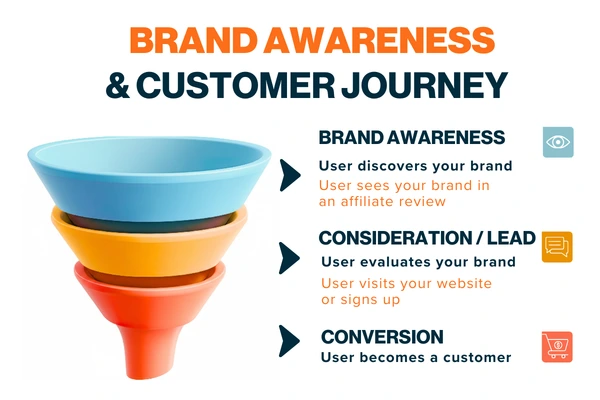
Brand awareness is the first stage of the customer journey, and it plays a critical role in enabling lead generation and conversions.
Before someone becomes a customer, they first need to discover your brand, then develop interest, and only after that decide to purchase.
This process is often described as a marketing funnel:
Without awareness, the other stages cannot happen, because customers cannot choose a brand they have never encountered.
Brand Awareness Examples
Real-world examples show how awareness influences growth.
Spotify: Many users search directly for Spotify instead of searching for music streaming services, which reflects strong brand awareness.
Amazon: Amazon has built such strong awareness that millions of users visit the platform directly instead of searching for individual retailers.
Duolingo: Duolingo’s consistent marketing and product presence have made it one of the most recognized language learning apps globally.
These brands benefit from familiarity, which makes customer acquisition easier.
How to Measure Brand Awareness
If you are investing in brand awareness, it’s important to track whether more people are actually recognizing and searching for your brand over time. Unlike direct response campaigns, awareness doesn’t rely on a single metric, but there are several clear signals that show whether your brand visibility is growing.
One of the strongest indicators is branded search volume. When more people search for your brand name directly on Google, it means awareness is increasing and users are actively thinking about your brand.
Another important signal is direct traffic, which reflects how many users visit your website by typing your URL directly or accessing it without relying on search engines or ads. This usually indicates that users already know your brand.
Reach and impressions also help measure awareness by showing how often your brand appears in front of users across advertising campaigns, affiliate placements, and content distribution channels.
If you run affiliate programs, growth in the number of active partners promoting your brand is another strong awareness indicator. Publishers are more likely to promote brands they recognize and trust.
Over time, you may also notice improvements in conversion rates, because users who are already familiar with your brand typically require less persuasion to convert.
Together, these metrics provide a clear picture of how your brand awareness is evolving
Common Brand Awareness Mistakes
Many brands struggle to build awareness because they focus too heavily on short-term conversions instead of long-term visibility.
One of the most common mistakes is focusing only on conversion campaigns, without investing in channels that introduce the brand to new audiences. While conversion campaigns are important, they perform significantly better when awareness already exists.
Another frequent mistake is relying on a single acquisition channel, which limits exposure and slows down brand recognition. Brands grow faster when they appear across multiple trusted platforms, including search, affiliate websites, creator content, and advertising placements.
Inconsistent brand presence can also weaken awareness. When your brand appears rarely or irregularly, it becomes harder for users to remember and recognize it.
The most successful brands focus on maintaining consistent exposure across multiple channels, which gradually strengthens recognition and trust.
How Yep Ads Helps Brands Grow Awareness
Building brand awareness globally requires access to the right partners, audiences, and distribution channels. This is where performance marketing plays a critical role.
Yep Ads helps brands increase awareness by connecting them with trusted publishers, creators, and affiliate partners across multiple verticals and geographic regions. These partners introduce brands to new audiences through reviews, comparison articles, and content placements where users are actively exploring solutions.
This type of exposure helps brands build familiarity in a natural and scalable way, while also supporting performance goals such as traffic and conversions.
Because Yep Ads operates across global markets, brands can expand their reach beyond their existing audience and accelerate awareness growth in new regions.
As awareness increases, brands often see stronger partner adoption, improved conversion performance, and more efficient scaling across their marketing campaigns.
FAQs About Brand Awareness
What is brand awareness?
Brand awareness is how familiar customers are with your brand.
Why is brand awareness important?
It improves trust, conversions, and growth.
How do companies increase brand awareness?
Through affiliate marketing, advertising, and content.
How do you measure brand awareness?
Using traffic, reach, and branded searches.
Final Thoughts
Brand awareness is one of the most important drivers of marketing success because it directly influences trust, conversion rates, and acquisition efficiency.
Brands that invest in awareness create a foundation for sustainable growth.
Performance marketing accelerates this process by introducing brands to new audiences at scale.
When awareness and performance marketing work together, brands grow faster, scale more efficiently, and build stronger market presence.
You Might Also Like
- Brand Building vs. Short-Term Performance: Why the Smartest Brands Do Both
- Brand Marketing vs Performance Marketing: Key Insights
- Why Your Brand Should Embrace Affiliate Marketing
- Smarter Ad Spend in 2026: How Affiliate Marketing Helps You Maximize ROI
- How to Make Your Brand Successful with Yep Ads
Share