
What Is an Affiliate Tracker? And What Does It Actually Track?
Say you’re promoting the same offer across all your channels, through a blog article, an email, and a social campaign.
The blog sends the most clicks. The email generates the most sales. Social doesn’t bring that many visitors, but those who do visit are converting at a much higher rate.
That’s the kind of difference an affiliate tracker helps uncover and goes deeper in.
An affiliate tracker connects clicks with whatever follows from them, helping affiliates and brands have a birds-eye view of their campaign to see what actually leads to sales, leads, installs, and other valuable actions.
Instead of stopping at “someone clicked,” you can follow through the click to see what happened afterwards. Where did the visitor come from? Did they complete the action you wanted? Which campaign should receive credit? How much was that conversion worth?
Those answers matter because affiliate marketing is built around measurable outcomes. Sending traffic is only the starting point, you need to understand the direction that traffic is flowing and what it’s doing.
Key Takeaways
- An affiliate tracker connects marketing activity with outcomes such as sales, leads, and installs.
- Tracking links and identifiers help show where traffic and conversions originated.
- Tracking records what happened, while attribution determines where credit goes.
- Affiliates can use tracking data to compare campaigns and improve performance.
- Brands and networks use tracking to measure partner performance, report results, and support accurate commissions.
What Is an Affiliate Tracker?
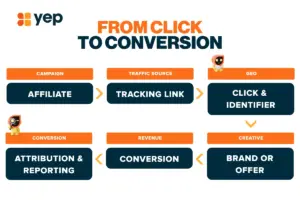
An affiliate tracker follows the journey between someone interacting with an affiliate promotion and completing a measurable action.
A simplified version looks like this:
Traffic → Click → Identifier → Conversion → Attribution → Reporting
An affiliate might receive a unique link for an offer and embed it anywhere from a blog, ad, email, social post, or another traffic source.
Whenever that link gets clicked on, information attached to it can help identify details such as the affiliate, campaign, or placement that generated the visit.
If that person then continues on to complete the required action, the tracking setup can connect the conversion with the activity that came before it.
The conversion doesn’t always have to mean a purchase. Depending on the campaign, a conversion could be a lead, registration, subscription, app install, booking, or another agreed action.
If you’re unfamiliar with the link itself, Yep’s guide to creating affiliate links explains how unique affiliate IDs and sub-IDs can be used to separate and identify traffic.
What Does an Affiliate Tracker Track?
There isn’t one universal list because tracking setups vary.
A content publisher promoting retail products will probably care about different information than a media buyer running campaigns across several countries and traffic sources.
Still, affiliate trackers commonly work with data such as:
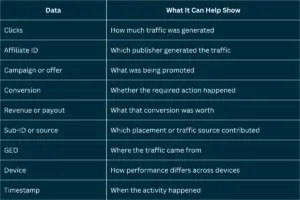
The value comes from connecting these pieces.
Imagine two affiliates both generate 1,000 clicks.
Affiliate A generates 20 sales. Affiliate B generates 75.
The traffic totals look identical until the tracker connects those clicks to their outcomes. Now the numbers tell you something useful.
The same idea can go deeper. Maybe one GEO converts better. Perhaps one creative generates fewer clicks but attracts people who are more likely to buy. It only takes one particular placement to become the driving force for a large share of the revenue.
Tracking provides the information needed to find those differences.
How Does Affiliate Tracking Work?
Let’s use a simple example.
An affiliate publishes an article about meal-kit subscriptions and has an affiliate link to one of the brands featured in the article.
1. The Affiliate Uses a Tracking Link
The link contains information that can identify the affiliate and, depending on the setup, additional campaign information.
That might include a campaign ID, sub-ID, placement, or another identifier.
2. Someone Clicks the Link
The click is recorded.
Depending on the tracking setup, cookies, link parameters, server-side tracking, or a combination of methods can help maintain the connection between that visitor and the affiliate referral.
Modern affiliate platforms increasingly use more than one tracking method. Awin, for example, describes both browser-based and server-side approaches as part of current affiliate tracking methods.
3. The Visitor Reaches the Brand
Maybe they make the decision on the fly and decide to buy immediately.
Maybe they look around, leave, think about it for two days, and return later.
The tracker needs enough information to determine whether a later qualifying action can still be associated with the original referral.
4. A Conversion Happens
The visitor completes whatever action the campaign defines as a conversion.
That could be a purchase, lead, app install, registration, or another measurable action.
Information about that conversion is then passed into the tracking system.
5. The Conversion Is Matched and Reported
Now to look at the reporting, the platform applies the program’s attribution rules and, where appropriate, associates the conversion with the affiliate responsible for generating it.
You can view the result alongside information such as clicks, conversions, revenue, or commissions.
The main point is to know whether the click and conversion can be connected reliably.
Tracking and Attribution Are Different
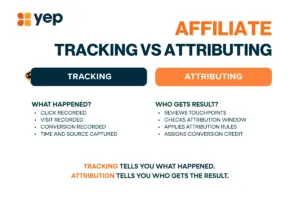
These terms are closely related, but they’re doing different jobs.
Tracking records what happened.
Someone clicked an affiliate link at 2:10 p.m. They later completed a purchase.
Attribution decides which interaction receives credit.
That distinction starts to get a whole lot more important if the journey has multiple touchpoints.
Imagine someone discovers a pair of shoes through an affiliate review on Monday. They visit the brand again through search on Wednesday. On Thursday, they return and buy them.
The conversion happened. That’s the tracking side.
Who receives credit for influencing it depends on the attribution rules being used.
An attribution window determines how long an earlier interaction may remain eligible for credit. The attribution model determines how credit is assigned when multiple interactions are involved.
Why Does Affiliate Tracking Matter?
The biggest reason is fairly straightforward: it gives you something better to work with than traffic alone.
Affiliates Can Compare What Is Working
Suppose you’re running the same campaign through three creatives.
Creative A gets the most clicks.
Creative B gets fewer clicks but twice as many conversions.
Creative C performs well in Canada but poorly in the UK.
Without tracking, you mostly see traffic.
With the relevant tracking data, you can start delving into strategizing which creative, campaign, audience, GEO, placement, or offer needs more attention or investing in.
This is what makes data useful for optimizing affiliate campaigns. You can make changes based on what people actually do after clicking rather than simply choosing whatever generated the largest traffic number.
Brands Can Measure Partner Performance
Brands need the same visibility from the other side.
If ten affiliates are promoting an offer, tracking can help show which partners are contributing conversions and revenue rather than simply sending visitors.
That information can influence partner strategy, campaign terms, budgets, creative decisions, and where there may be an opportunity to scale.
Tracking Supports Affiliate Payments
Commissions are tied to outcomes.
If an affiliate gets paid whenever somebody purchases, installs an app, submits a qualifying lead, or completes another action, there needs to be a record connecting that action with the appropriate partner.
Tracking allows for that record to be built.
While it sounds obvious, this is one of the reasons tracking sits at the center of the affiliate model. Performance-based payouts only work when you can measure performance.
Why Don’t Different Tracking Platforms Always Match?
Seeing slightly different numbers across two dashboards isn’t unusual.
Systems can differ in how they:
- define conversions;
- handle attribution windows;
- record timestamps and time zones;
- filter invalid or duplicate events;
- process delayed conversions;
- identify traffic;
- apply attribution rules.
There can also be actual tracking problems, including missing parameters, broken integrations, duplicate events, or conversions that aren’t being passed correctly.
The important part is understanding what each platform is measuring before deciding that a difference is leading to something wrong being done.
Does an Affiliate Need Their Own Tracker?
Not always.
Someone running a content site and working through an affiliate network may already have the core tracking and reporting they need.
The network can provide unique links, record conversions, and show information such as clicks, earnings, or campaign performance.
You also have the side of a more advanced media buyer who wants to go with the additional affiliate tracking software.
If you’re testing dozens of ads, landing pages, sources, GEOs, and campaigns at once, more detailed tracking can make it easier to analyze those variables separately.
It depends on how complicated your setup has become.
How Does Tracking Work With Yep Ads?
With Yep Ads, tracking is built into the wider campaign setup through Yep’s tracking infrastructure and platform integrations, giving partners visibility into activity from click through conversion.
Working with Yep brings an in-house tracking platform and integrations to monitor your campaign activity from click to conversion. For affiliates, that means tracking links and performance reporting are already connected to the campaigns they’re running.
For brands, it provides visibility into how different partners and traffic sources are contributing to results.
Yep then uses that information as part of its broader campaign management process, where campaigns, traffic quality, conversions, creatives, payouts, and traffic sources can be followed and optimized over time.
The tracker provides the data. The useful part is knowing what to do with it.
What Should Good Affiliate Tracking Tell You?
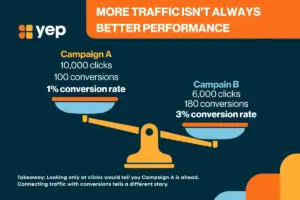
You don’t need a dashboard packed with metrics simply because they can be measured.
Useful affiliate tracking should help answer practical questions:
- Where did this conversion come from?
- Which publisher generated it?
- Which campaign or offer was involved?
- What did the conversion generate?
- Are certain sources performing better than others?
- Is something behaving differently than expected?
- What should we test or change next?
That last question is where tracking becomes especially valuable.
A tracker does not optimize a campaign by itself. It gives the people running the campaign better information to work from.
Affiliate Tracker FAQs
What is an affiliate tracker?
An affiliate tracker records activity generated through affiliate marketing and connects conversions with the relevant affiliate, campaign, or tracking link. It helps brands, networks, and affiliates understand where results came from, measure campaign performance, calculate commissions, and make better optimization decisions.
How does an affiliate tracker know who generated a sale?
Affiliate links contain identifiers that can associate a click with a particular affiliate or campaign. When a qualifying conversion happens, the tracking system uses the available tracking information and the program’s attribution rules to determine whether that conversion should be credited to the affiliate.
What’s the difference between affiliate tracking and conversion tracking?
Conversion tracking records when a desired action takes place, such as a purchase or lead. Affiliate tracking connects that conversion with the affiliate marketing activity behind it, including the publisher, campaign, offer, or tracking link responsible for generating the referral.
Can affiliate tracking work without cookies?
Yes. Cookies remain part of affiliate tracking, but tracking does not have to rely on them alone. Modern setups can combine browser-side methods with server-to-server tracking and other identifiers. Current Awin guidance, for example, supports both client-side and server-side approaches.
Do I need affiliate tracking software to get started?
Not necessarily. Many affiliate networks already provide tracking links and reporting. Dedicated tracking software becomes more useful when your campaigns grow more complex and you need to analyze multiple traffic sources, landing pages, creatives, GEOs, or other variables in more detail.
Final Thoughts
An affiliate tracker connects all the steps before a conversion with the result that came after it.
Affiliates get a cohesive view of which campaigns are performing and allows for brands to measure the partners and traffic contributing to their goals.
The technology behind the process can get complicated, but the purpose isn’t: understand where your results came from so you can utilize them to make better decisions about what happens next.
You Might Also Like
Share
