
5 CRO Strategies to Drive More Conversions in 2026
Let’s be honest: getting people to your website is only half the battle. If visitors are landing on your site and leaving without taking action, more traffic isn’t necessarily going to solve the problem. As AI-powered search changes how people discover and interact with information, getting more value from visitors who reach your website is becoming increasingly important. So, how do you turn more of those visitors into leads and customers?
That’s where Conversion Rate Optimization (CRO) comes in.
CRO is the process of improving your website so more visitors take valuable actions, whether that means filling out forms, booking a demo, signing up, or making a purchase.
In this guide, we’ll explore five CRO strategies you can use in 2026 to turn more of your existing website traffic into meaningful conversions.
Key Takeaways
- A clear value proposition helps visitors quickly understand what you offer and why it matters.
- A/B testing allows you to make data-informed decisions instead of relying on assumptions.
- Reducing friction throughout the user journey can make it easier for visitors to convert.
- Aligning SEO with CRO helps turn relevant website traffic into leads and customers.
- CRO is an ongoing process of testing, learning, and improving — not a one-time website fix.
Table of Contents
- Make Your Value Proposition Clear
- Use A/B Testing to Make Data-Driven Decisions
- Reduce Friction in the User Journey
- Align SEO With CRO
- Optimize Your Highest-Impact Pages
- Frequently Asked Questions
1. Make Your Value Proposition Clear
Visitors should be able to understand what your business offers and why it matters within seconds of landing on your website.
Your value proposition should answer a simple question: Why should someone choose you?
If visitors have to scroll through half the page to figure out what you actually do, you are already making conversions harder than it needs to be. Make it clear, make it compelling, and give visitors a reason to click.
What to Include
- Clear headlines that immediately communicate your offering
- Benefit-focused messaging that explains the value to the customer
- Strong calls-to-action, such as “Book a Demo” or “Get Started”
- Relevant incentives, such as a free trial, consultation, or downloadable resource
- Specific benefits or proof points that help build trust
Instead of simply describing what your product or service does, focus on how it solves a problem or improves the customer’s situation.
2. Use A/B Testing to Make Data-Driven Decisions
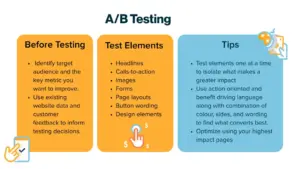
CRO shouldn’t be based on guesswork. A/B testing allows you to compare different versions of a website element and see which performs better.
Test With a Purpose
Rather than changing multiple elements at once, isolate variables where possible. This makes it easier to understand which change influenced the results.
For example, you could test:
Version A: “Start Free Trial”
Version B: “Try it Free”
The goal isn’t simply to find a version that gets more clicks. Look at whether the change ultimately contributes to better-quality leads, sales, or other meaningful business outcomes.
Give your test enough time to build a clear picture. The more traffic and conversions you collect, the more confidence you can have in the results.
3. Reduce Friction in the User Journey
Even interested visitors can abandon a website when the process of taking action becomes too difficult.
- Make the user experience as simple as possible
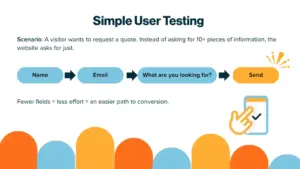
CRO is partly about making the path from interest to action as simple as possible.
Understanding how users respond to different messages and experiences can help you identify where that friction is coming from.
Common sources of friction include:
- Complex or lengthy forms
- Slow-loading pages
- Confusing navigation
- Unclear messaging
- Too many steps before completing an action
- Poor mobile experiences
Make Converting Easier
Review your website from the perspective of a first-time visitor.
Ask yourself:
Can I quickly understand what this business offers?
Do I know what I should do next?
Is there anything making that next step unnecessarily difficult?
Removing even small obstacles can create a smoother experience and give visitors fewer reasons to leave.
4. Align SEO With CRO
SEO and CRO work best when they’re treated as connected parts of the customer journey.
SEO helps bring relevant organic traffic to your website. CRO helps you turn more of that traffic into meaningful actions.
Driving organic traffic is valuable, but traffic alone isn’t the end goal.
Your content should match the visitor’s search intent and provide a natural next step.
For example, an informational blog post could guide readers toward:
- A relevant downloadable resource
- A product or service page
- A demo
- A newsletter signup
The goal is to create a logical path from search → information → action.
5. Optimize Your Highest-Impact Pages

You don’t need to redesign your entire website. Instead, focus on the pages that have the greatest potential to influence revenue or customer actions.
These might include:
- Homepage
- Landing pages
- Pricing pages
- Product or service pages
- High-traffic blog posts
- Checkout or signup pages
Start by identifying where you have significant traffic, engagement, or conversion opportunities.
Then use analytics, customer feedback, and testing to identify what could be improved.
Frequently Asked Questions
What is CRO?
Conversion Rate Optimization is the process of improving a website or user experience to increase the percentage of visitors who take a desired action.
Why is CRO important in 2026?
As businesses compete for attention across search engines, AI-powered search, social platforms, and other digital channels, maximizing the value of existing website traffic can become just as important as generating more traffic.
What can you A/B test?
You can test many website elements, including headlines, CTAs, images, forms, layouts, messaging, and other design or content elements.
How do SEO and CRO work together?
SEO helps attract relevant visitors, while CRO focuses on converting those visitors into leads, customers, or other valuable actions. Together, they connect traffic generation with business outcomes.
Final Thoughts
CRO isn’t about finding one headline, button, or design change that suddenly transforms your website.
It’s an ongoing process of understanding your audience, analyzing behavior, testing improvements, and learning from the results.
Instead of only asking:
“How do we get more visitors?”
Start asking:
“How can we create more value from the visitors we already have?”
That shift in mindset can make CRO an important part of your 2026 growth strategy.
Ready to turn more of your traffic into results? At Yep Ads, we help brands connect with the right audiences, drive quality traffic, and build campaigns focused on measurable growth. If you’re looking to scale with performance-based affiliate marketing, see how we can help!
Share
