
Boost Performance with Retail Media Networks & Affiliate Marketing
Explore how retail media networks and affiliate marketing can work together to help your brand reach shoppers, strengthen campaigns, and drive measurable growth.
Retail media networks have earned their place in the marketing conversation, and if you’re considering adding them to your strategy, you’ve got some interesting decisions ahead.
Which retailers make sense for your brand? Where should your budget go? And how can you make the most of the affiliate partnerships you’ve already worked hard to build?
The good news is you have plenty of ways to bring these channels together. With the right approach, retail media and affiliate marketing can complement each other, helping you reach shoppers, support sales, and understand where your investment is making a difference.
Let’s talk about making that work for your brand.
- Retail media networks put your products in relevant shopping environments, with placements informed by retailer data.
- Affiliate marketing adds another layer, bringing reviews, creators, comparison sites, and loyalty partners into your strategy.
- A little coordination goes a long way. Align your goals, promotions, and tracking before campaigns go live.
- Give the numbers a proper look. Attributed sales can overlap, so focus on understanding what your marketing actually contributes.
What Are Retail Media Networks?
Retail media networks (RMNs) are ad platforms run by retailers. They sell placements on their own sites and apps, and more and more across the wider web, targeted with what they know about real purchases.
The appeal is clear. Few ad channels sit this close to the checkout button.
Where Most US Brands Start
If you’ve searched Amazon and seen “Sponsored” on the first few products, you’ve seen a retail media network in action. In the US, most brands start with these three:
- Amazon Ads: the biggest player, covering search, display and video across Amazon and beyond
- Walmart Connect: Walmart’s network, reaching shoppers online and in-store
- Roundel: Target’s network, known for its strong first-party shopper data
Types of Retail Media Placements
Placements come in three types:
- On-site: sponsored products, search ads and display on the retailer’s site and app
- Off-site: social, video, CTV and other websites, targeted with the retailer’s audience data
- In-store: digital screens and placements in physical stores
Retail media is also part of the wider commerce media world, which brings the same approach to travel, financial services and delivery apps. Brands are also staying with it. IAB Europe’s November 2026 research found that 71% of surveyed European buyers had worked with retailers for more than a year, up from 51% in 2024.
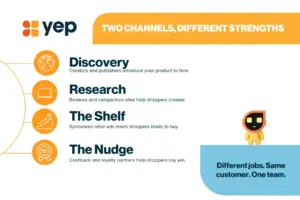
Two Channels, Two Different Strengths
Source: Yep Illustrated Infographic
On paper, retail media and affiliates look almost identical. Both are performance-driven, and both are judged on sales. They just do their best work at different moments.
Retail media reaches people who are already shopping. Someone types “espresso machine” into Amazon, and your sponsored listing is right there.
Affiliates reach people earlier:
- the review site ranking the best espresso machines under $500
- the creator pulling three shots on camera and making it look easy
- the cashback app that gives a hesitant buyer a reason to commit
Affiliates are where people make up their minds. Retail media is where they act on it.
Picture a shopper who reads a comparison article on Monday, watches a creator demo on Wednesday, then searches the retailer on Friday and clicks a sponsored listing. Three channels helped make that sale, but by default only one gets the credit.
Shoppers rarely take a straight path, and that’s okay. What matters is showing up wherever the decision is being made, which is the core of any good omnichannel advertising strategy.
Where They Step on Each Other’s Toes
Most guides tend to skip this part, but we’d rather you hear it from us than find it in a quarterly report.
- Both claiming the win: The retail media dashboard and the affiliate network can both count the same order. Add them together and your results look better than they are.
- Paying twice for your own customers: Ads on your brand name often reach shoppers an affiliate already sent your way. That means paying both the commission and the click.
- Publishers going unpaid: When a publisher sends traffic to a retailer instead of your site, your affiliate network usually can’t see the sale. The publisher earns nothing and moves on to someone else.
- Mixed messages: A coupon site promotes 20% off while the retailer listing shows full price. Shoppers notice.
None of this means you need to pick one channel. It just means the two should be planned together.
How to Get Them Working Together
1. Agree on one goal per campaign
Decide what success looks like before you choose placements. That could be a launch, new customers, or growth in a category you already sell in. Then give each channel its job. Affiliates make the case for the product, and retail media puts it in front of people ready to buy. When everyone is aiming at the same goal, budget conversations get much easier.
2. Let each channel do what it’s good at
Use affiliates while people are still comparing, through reviews, roundups and creator content. Use retail media once they’ve decided to shop, in product and category searches on the retailer. Check your brand-term bids against affiliate performance so you’re not paying twice for the same customer. Our media buying guide covers how to match placements to intent.
3. Make sure affiliates get paid for retailer sales
If we had to pick one step not to skip, it’s this one. When publishers send shoppers to Amazon or Walmart, agree up front how that traffic is tracked and rewarded. Partners stay loyal when they feel looked after.
On Amazon, you can give partners Amazon Attribution tags to measure the sales they drive. Brands enrolled in Brand Registry can also earn a credit on that traffic through Amazon’s Brand Referral Bonus. Attribution tags and Amazon Associates links are separate systems, so don’t expect them to work on the same link.
Flat fees, hybrid deals, or sending affiliate traffic to your own site (where tracking is clean) are all good options too.
4. Keep offers, prices and stock in sync
Share one promo calendar with your retail media team, your affiliates and your retailers. Check product copy, approved offers and landing pages before launch, and make sure the product is in stock. A great review that sends readers to an out-of-stock page is a missed sale.
5. Sort out tracking before launch day
Tracking is nobody’s favourite part of planning, but it decides whether your results make sense later. Before anything goes live, confirm attribution windows, tracking methods and reporting for each retailer and network.
Measuring What Matters (Without Counting Twice)
Source: Yep Illustrated Infographic
Once both channels are live, you’ll have plenty of data. Retail media reports show how products and placements perform. Affiliate dashboards show which partners drive clicks, orders and revenue.
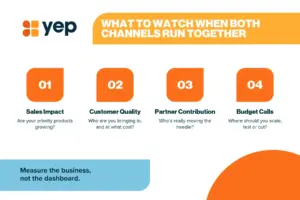
Don’t add them together. Each platform uses its own lookback window, and each will happily credit itself for the same order. Instead, measure against your business goals:
- Sales impact: Are your priority products and categories growing?
- Customer quality: How many customers are new to your brand, and what did they cost to win?
- Partner contribution: Which publishers, creators and placements are moving the numbers?
- Budget calls: What should you scale, keep testing or cut?
When the numbers disagree, try a holdout test. Pause one channel in one region or for one product line, then watch total sales. That shows what each channel really adds, which no single dashboard can.
Where Yep Ads Fits In
We help brands and publishers in 140+ countries grow through ecommerce affiliate marketing, paid traffic and performance-led customer acquisition. When retail media joins the mix, we make sure your affiliate side pulls in the same direction, with the right publishers, clean tracking and commission deals that work for everyone.
The Bottom Line
Retail media networks put your products in front of people ready to buy. Affiliates shape what those people want before they get there. Kept apart, the two channels end up competing. Planned together, each one makes the other stronger.
Start with one goal, give each channel a clear job, and sort out tracking early. And if you’d like a hand with the affiliate side, come say hi to Yep Ads. We’d love to hear what you’re working on.
Frequently Asked Questions
What’s the difference between retail media and affiliate marketing?
Retail media is advertising sold by retailers, on their own sites and apps or across other channels using their shopper data. Affiliate marketing pays partners like publishers, creators and comparison sites to promote products, usually on commission.
Can affiliate marketing and retail media networks run together?
Yes, and they work best when planned together. Line up your goals, offers and tracking so the channels support each other instead of competing for the same sale.
Do affiliates get paid when they send traffic to Amazon?
They can, but it takes some setup. Brands often use Amazon Attribution tags, flat fees or hybrid deals so publishers are rewarded for retailer sales their affiliate network can’t track.
How do brands measure both channels without double counting?
Don’t add the platform-reported sales together. Compare channel reports with total sales, new customers and acquisition cost, and use holdout tests to see what each channel really adds.
You Might Also Like
Share
