
Mobile Native Advertising: How to Win the Scroll
A few inches of screen, one moving thumb and a very small window to get somebody interested. Welcome to mobile native advertising.
There is something quite nice about catching somebody at exactly the right moment.
They are scrolling through an article, browsing a feed or happily following a trail of recommended content when your ad appears right where their attention already is. It looks at home, the topic feels relevant and, for a second, the scrolling slows down.
That is where mobile native advertising earns its keep.
On mobile, you don’t get a lot of screen space or much time for introductions. The creative needs to make sense quickly, the placement needs to feel natural, and whatever happens after the tap needs to live up to the interest that got somebody there.
Get those pieces working together and mobile native becomes a lovely little meeting point between content discovery and performance.
Key Takeaways
- Mobile native works with the way people already scroll and discover content.
- Clear creative matters even more when you only have a small screen to work with.
- Placement and surrounding content can shape the quality of the traffic you receive.
- The campaign does not end at the tap. Landing experience and conversion quality matter too.
What Is Mobile Native Advertising?
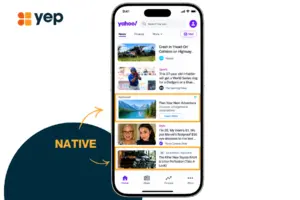
Source: Yep Illustrated Infographic
Mobile native advertising places paid content inside experiences that already feel familiar on a phone, from article feeds and apps to recommended stories.
Google notes that in-feed native ads are especially well suited to mobile because they fit naturally into the user’s flow and make good use of limited screen space.
There is still an important line to respect, though. Natural does not mean sneaky. The FTC’s native advertising guidance says sponsored content should remain clearly recognizable as advertising across devices.
That is really the charm of native: feel at home without pretending you own the place.
Mobile Gives Your Creative a Few Inches to Make Its Case
A desktop creative can afford to stretch its legs a little. When it comes to mobile, it starts to become like getting a good seat on a very crowded train.
Every element suddenly feels closer together.
That is why strong mobile native creative usually has a clear focal point, a headline you can understand without studying it and imagery that still makes sense when it is reduced to feed size.
You have room to be playful, curious, and interesting. There is considerably less room to be confusing.
Before approving a creative, look at it at roughly the size somebody will actually see on their phone. If the main idea is still obvious, great. If you suddenly need to explain something niche that everyone should be looking at, the creative may be asking a bit too much from the scroll.
Yep’s native advertising solutions also put emphasis on authentic-looking visuals and testing different headlines and thumbnails rather than assuming the first version has magically nailed it.
Native tends to serve as a reminder that it really is the audience that gets the final vote.
Keep the Good Feeling Going After the Tap
Somebody liked the ad enough to leave what they were doing and visit your page. That is a small act of faith. Let’s carry that all the way through.
The landing experience should immediately feel connected to the creative that brought them there. Keep the message familiar, make the copy comfortable to read and give the next step enough visibility that nobody needs a treasure map to find it.
This is especially important on mobile, where awkward forms, tiny buttons and unnecessarily heavy pages become obvious very quickly and you can lose the reader instantly.
Google’s current landing-page recommendations emphasize keeping the destination relevant to the ad while making mobile experiences quick and easy to navigate.
If this part of the funnel needs some attention, Yep’s guide to building landing pages that convert digs further into creating a cohesive experience between the creative and the page.
The Placement Has Something to Say Too
Once mobile native traffic starts coming in, look beyond the campaign average.
The publisher, placement and surrounding content can all shape how valuable that traffic is. One placement might send plenty of clicks, while another quietly delivers more qualified leads or sales.
That is where native gets interesting for media buyers: you start seeing where the offer feels most natural, not simply where traffic is cheapest.
Yep’s guide to media buying explores the same idea of matching the placement to the audience, offer and campaign goal.
CTR Can Have a Seat at the Table
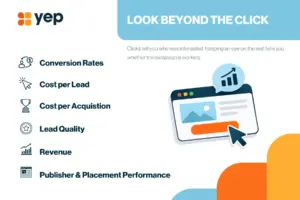
Source: Yep Illustrated Infographic
Click-through rate deserves attention in native. Headlines and visuals are doing a lot of work at the top of the funnel, so changes in CTR can tell you whether the creative is earning curiosity.
Just do not give it the whole meeting.
Once people tap, the more interesting questions start showing up. Are they converting? Are the leads useful? Are customers buying? Is one publisher quietly outperforming another once you look past the first click?
Depending on your campaign, that could mean keeping an eye on:
- Conversion rate
- Cost per lead
- Cost per acquisition
- Lead quality
- Revenue
- Publisher and placement performance
A healthy CTR is lovely to see. A healthy CTR attached to a campaign that produces real business is considerably lovelier.
Test Enough to Learn Something
Native gives you plenty to test, but you do not need a spreadsheet big enough to frighten the team.
Play around with some different creative ideas, then watch which headlines, visuals, and placements are producing meaningful results.
Yep’s native offering includes creative testing and ongoing optimization for exactly that reason: the campaign gets smarter as the traffic starts telling you what works.
When Mobile Native Has Room to Shine
Mobile native works especially well when an offer benefits from a little context before the conversion.
That can make it a strong fit for areas such as ecommerce, finance, insurance, health and wellness, and cybersecurity, where people may want to understand the idea before taking the next step.
You are already meeting them while they are reading, browsing and discovering. Build on that curiosity and give them somewhere useful to go.
Mobile Native Advertising With Yep Ads
Mobile is hardly unfamiliar territory for Yep Ads. Alongside native advertising, Yep works with in-app traffic, app-focused performance models and mobile user acquisition, giving the team experience with what happens when a campaign moves onto the smaller screen.
That matters with mobile native because it’s the little details that carry the most weight. The placement, creative, publisher environment and post-tap experience all need to play nicely together, and Yep supports those campaigns with creative testing, traffic access, performance tracking and ongoing optimization.
After all, getting someone to think twice when they are scrolling on their phone is nice, but knowing what to do with that attention is where the experience comes in.
FAQs
What is mobile native advertising?
Mobile native advertising uses paid placements designed to fit naturally within feeds, articles, apps and other content people browse on their phones, while still being clearly identified as advertising.
Where do mobile native ads appear?
Mobile native ads commonly appear inside editorial feeds, articles, recommended-content sections and apps. Their design typically adapts to the publisher or platform where they appear.
Is native advertising good for mobile traffic?
Mobile can be particularly well suited to native because in-feed formats fit naturally into smaller screens and scrolling experiences. Performance still depends on the offer, creative, placement and experience after the tap.
How do you optimize mobile native advertising?
Test meaningful creative variations, monitor publisher and placement performance, keep the mobile landing experience smooth and use conversion quality to decide what deserves more attention and budget.
Final Thoughts
There is something refreshingly simple at the heart of mobile native advertising. Somebody is already enjoying content on their phone, your ad joins the experience, and you get a small opportunity to make them curious about what comes next.
Use that opportunity well.
Make the creative easy to understand, choose placements where the offer has something useful to add, and make the experience after the tap feel worth the visit. The best native advertising on mobile is able to enhance their experience.
Ready to Put Mobile Native to Work?
For brands: Ready to explore mobile native traffic? Talk to Yep about building a campaign around your audience, offer and performance goals.
For publishers and affiliates: Running native traffic already? Connect with Yep to explore offers that feel right at home with your audience.
You Might Also Like
Share
